

Named for Apollo, the god of sun, light, music and poetry, the long lost city of Apollonia of Illyria was once, like Dyracchium to the north, one of the most important Mediterranean economic centers of the ancient world. Unlike Dyracchium, Apollonia today is little more than ruins spread across a couple hundred acres of overgrown hills overlooking the Adriatic Sea.
We parked in the shade of an olive tree and hiked up a small blocked off road where an empty entrance booth with turnstiles awaited. Puzzled, I looked around as I waited for Tola and the kids to catch up. A security guard sat in the shade and waved me over.
“No ticket,” he said with a wink. “Just buy me a beer.”
I’ve had some experience with baksheesh in Asia. Somewhere between a tip, a bribe and a tax to supplement low incomes, the practice seems to oil the cogs that keep everything running. Either that or it’s giving a crooked guard a beer belly at the expense of protecting the site and giving it the attention it deserves.
I handed him a dollar and we continued up the hill.
Founded in the 6th century BCE, the ancient city held a population of 60,000 people before an earthquake in the year 234 shifted the course of the river so that it no longer flowed by the city. The Aoös River, the modern Vjosë, now enters the sea ten kilometers from Apollonia. At one point this river held a major port and provided a connection between the Adriatic and the interior. The city was also a gateway to the Balkans during the Roman period, being an access point of the Via Egnatia, the road connection to Constantinople. The city slowly fell apart with the decline of Rome. Unlike the Via Egnatia, it was not revived with the advent of Byzantium but rather disappeared into obscurity and olive groves for well over a thousand years.
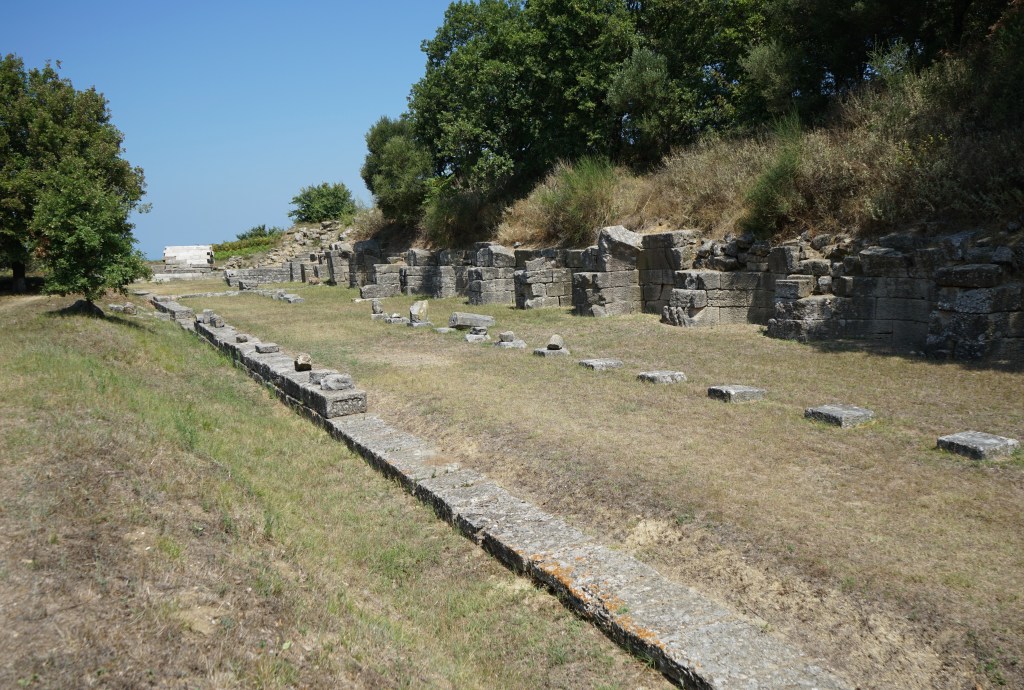
Despite being firmly entrenched in the historical record, with frequent mentions by Cicero, Aristotle and Caesar, Apollonia was not explored by archaeologists until the twentieth century. The city was centered on the Temple of Apollo, set between two hills. A Greek theater is built into the hillside and there are ruins of a massive nymphaeum, a nature sanctuary devoted to water nymphs.
Much of the lost city is yet to be discovered. Excavations in the last decade have found hidden temples and statues. Looters have also been active in digging through the ancient site. During the anarchy of the 1990s, the museum at Apollonia was pillaged and numerous artifacts disappeared.
A number of looters were caught digging in the ruins in 2017 and they had already taken out hundreds of artifacts, including intact amphorae and pottery thousands of years old.
Just two months ago, during a July, 2020 traffic stop a hundred kilometers from Apollonia, police found an ancient statue in the back of the car. This, along with other items recovered, had been recently dug up from hidden tombs in Apollonia. With the site closed and unvisited for many months, these tomb raiders have taken advantage of the Covid-19 lock downs to remain undetected as they plunder the hillsides of historical riches.
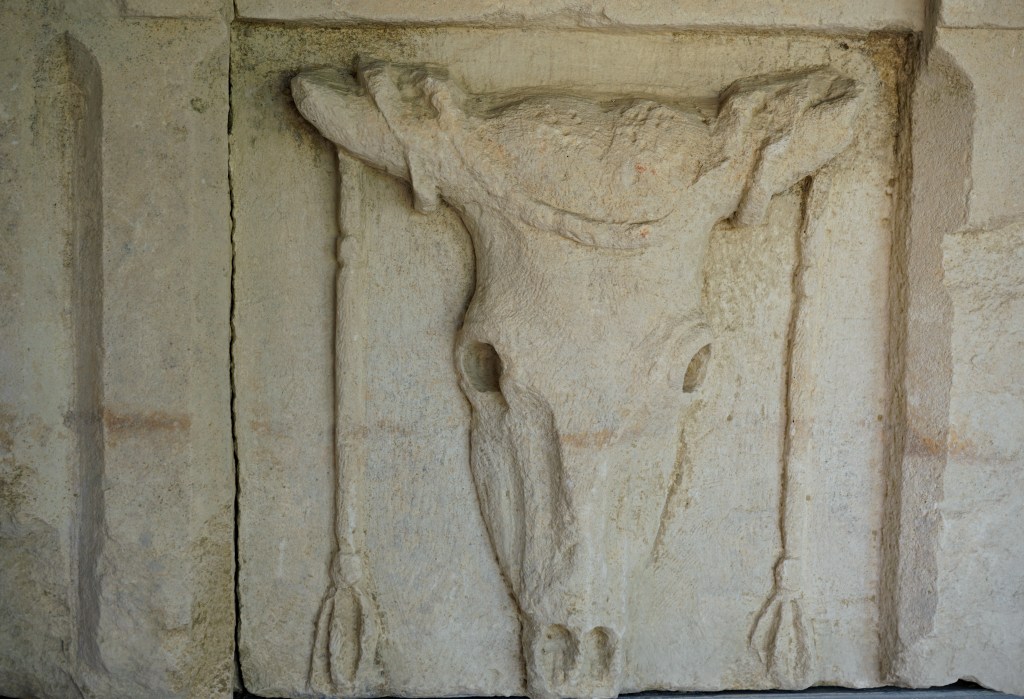
Recently, also in the wake of Covid-19 closures, the nymphaeum was attacked, its ancient columns knocked down and destroyed to the point of being beyond repair. This remains a mystery as no one knows when or why it happened, although it seems that some in Greece suspect the culprit may be Illyrian revisionists intent on erasing the evidence of Greek culture in favor of promoting Albania’s unique ancient Illyrian history.
Albania’s ancient Illyrian civilization is a source of pride of heritage for many people, and some nationalists insist that the ruins of Apollonia and other archeological sites in the country are Illyrian in origin. It seems unlikely, however, that groups of archeologists would try to erase Albania’s Greek history by breaking a few ancient columns that they believe to be Illyrian anyway.
Much of the vandalism of archeological sites around the world occurs because of religious beliefs. Intolerant fundamentalists feel they are doing a good deed by destroying an ancient heathen shrine. However, it also seems unlikely that this is the case in Albania where religion is more about cultural heritage than belief.
More likely, someone thought they could haul the columns off and make some money. They are a lot heavier than they appear.
The archeological site of Apollonia is so spread out that it could take days to explore it all. We spent a few hours wandering the quiet hills and looking for a clue to what the city once was. Besides a few people taking pictures of the temple and visiting the Byzantine church built over the ruins, we were the only ones there. That is besides, of course, the security guard. He slept in the shade of an old cedar tree and didn’t bother us as we walked back down the hill out of Apollonia. Maybe he’s resting up so he can catch the vandals and tomb raiders. Or maybe he just asks them for a beer and then goes back to sleep in the shade.
 ADVENTURE-SOMEWHERE.COM