
Are the police friend or foe? The answer to this really depends on who you are and where you are. If you are a foreigner in Cambodia, the police are about as friendly as leeches. They will do anything to suck your wallet dry. In Jordan, on the other hand, they will go out of their way to stop you just to shake your hand and say, “welcome to Jordan.”
I wasn’t sure what to expect in Albania. We spent a month in the country in 2018 and I don’t remember ever even seeing any police, although I met someone who talked about the anarchy of Albania in the late 1990s. At that time mobs stormed the police stations all over the country, taking all the weapons and chasing the police away. So maybe they’re still laying low.
In Himara, the primary purpose of the police seems to be making sure that no one turns onto the town’s single one-way street. There is one police van and it is usually parked at the corner of that street. If it’s not there, it’s cruising up and down the town’s main road with an officer leaning out the window telling cars parked on the street to move. I’ve also seen it parked at the beach on the quiet side of town where the topless sunbathers hang out. I don’t think the police bother them, but rather they just seem to sit in the van and watch.
My only encounter with the police in Himara was when I turned into the one-way street and they waved me back out and pointed to the one-way sign.
This is a country with a somewhat laissez-faire culture. As an American, I didn’t need a visa or Covid test to get in, and I’m welcome to stay for a year, not that anyone would notice if I went beyond that as border control didn’t bother to stamp my passport when I entered. People are free to fish from the beach and then make a campfire and cook their catch in the sand. Campers set up where they like. Drivers park where they like. It’s a refreshingly free country.
But it wasn’t always that way.
Albania was once the North Korea of Europe, a police state where borders were closed and its citizens closely monitored.
It began with World War 2. Albanian partisans fought Italian and then German occupying forces, finally driving the Germans out of Tirana in 1944. Ravaged by war, the country fell into the hands of a French-educated school teacher who vowed to rapidly rebuild and modernize Albania under the communist model. This man, Enver Hoxha, ruled Albania with near absolute authority until his death 41 years later.
Initially supported by the allies following the war, Albania soon cut communications with the West after the American CIA in collaboration with British intelligence attempted to foment a civil war and overthrow Hoxha in a failed military operation in the country. Friendly with the Soviets, Hoxha erected a monumental statue of Stalin in Tirana and renamed another Albanian city “Stalin Town.” But soon he decided that he neither trusted nor admired the Soviets and instead turned to the Chinese. He referred to himself, leader of three million people in Albania, and Mao, leader of nearly a billion Chinese, as the two lions of the world. Eventually, the Chinese fell out of favor with him and Albania became a completely isolated country.
Paranoid about invasion and assassination, Hoxha isolated himself in the “bllok,” a section of Tirana developed for the members of the government. This became an elite class of people with special privileges and imported foods and clothes, while the poor of Albania were fed slogans like, “we’d rather feed ourselves on grass than betray our ideology.”
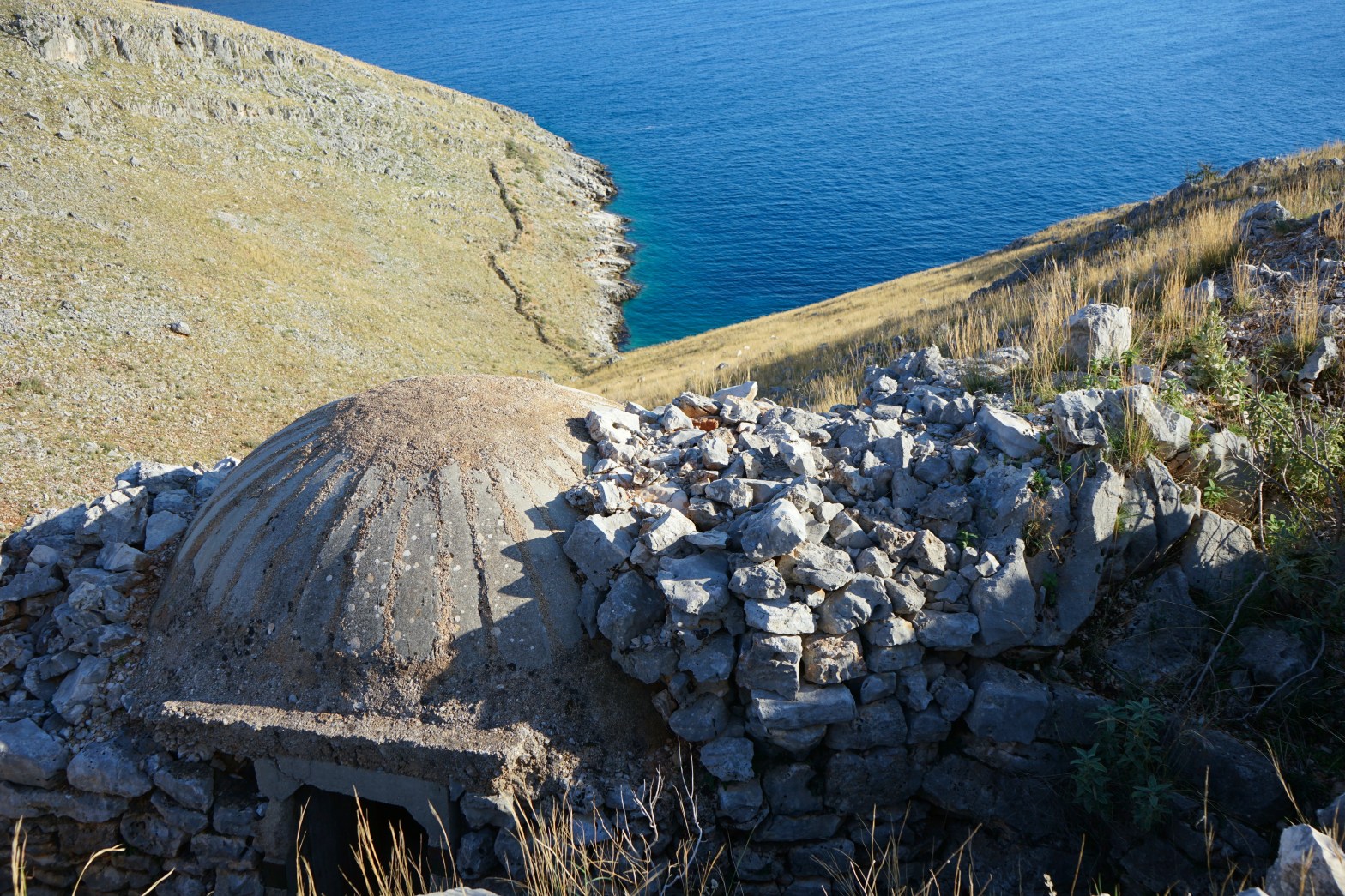
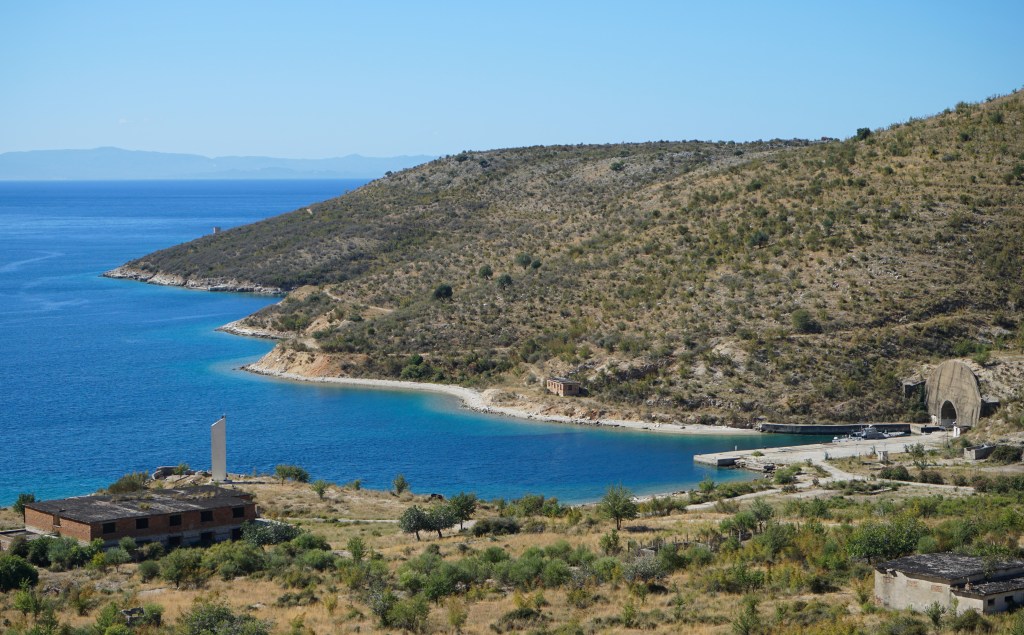
He also invested heavily in defense, building military installations around the country. The borders were draped in barbed wire, much of the coast became off limits for its citizens and hundreds of thousands of bunkers were built around the country. He came to fear both the Americans and the Soviets, as either could invade at any time.
He also feared his own people. Thousands of party members were executed or jailed in purges through the years, including every single interior minister that held the post between 1944 and 1982.
Hoxha was paranoid, maybe justifiably so as Albania became a country without a friend in the world. Once, when the famous Albanian missionary Mother Theresa wanted to return to Albania, she was denied entry because Hoxha was worried that she may be a foreign agent. Albanians were not trusted to leave and foreigners were not trusted to enter. It was a closed country.
In the 1960s Hoxha banned religion and went on to declare Albania an officially atheist state. Churches and mosques were demolished or repurposed as restaurants, youth clubs or art centers. The Catholic Church in Tirana was turned into a movie theater.
Like autocrats everywhere, he wanted his name on things. The university of Tirana was renamed Enver Hoxha University. His statues littered the country and he was portrayed as a hero and an intellectual genius.

For some, he is still venerated today. He freed the country from the Nazis. He successfully modernized Albania and ended the feudal system that held so many people down. He also vastly improved the education system and literacy rate in Albania. In fact, if it weren’t for Hoxha, Albania might have disappeared completely as many outside of the country wanted to split its lands between Yugoslavia and Greece.
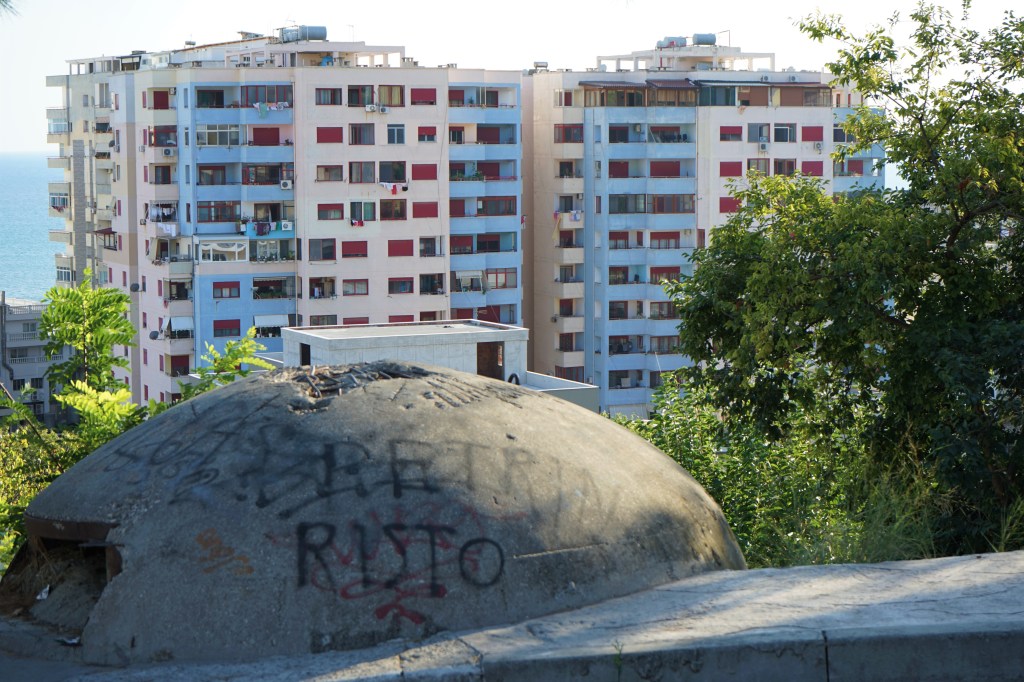
But in the eyes of many, he is viewed with contempt. At the time of his peaceful death in 1985, Albania was the 3rd poorest country in the world. There were only 1265 cars in the entire country, but more than 750,000 heavy concrete bunkers.
Communism in Albania collapsed in 1992 and with it went the statues of Hoxha. People took to the streets to tear them down and students protested to have his name taken off the university. People clashed over this as many Albanian citizens still considered him a hero deserving of respect.
In his final speech before his death, he praised himself, declaring that under his leadership “Albania has enjoyed great achievements . . . as never before seen in the course of history.”
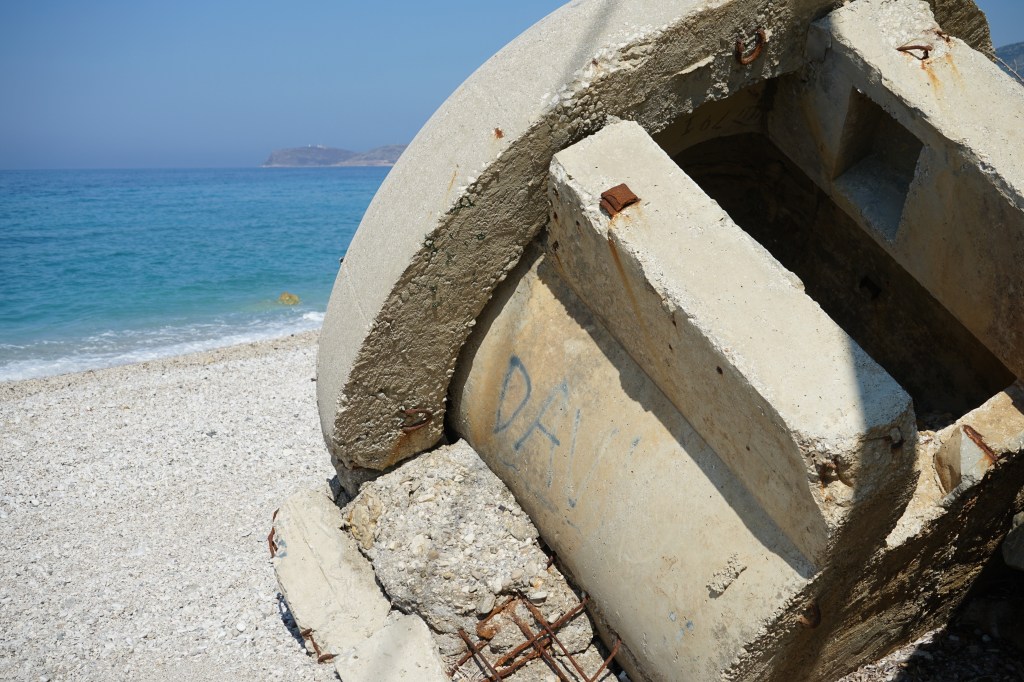
Albania is no longer Hoxha’s kingdom of isolation. During his rule, no one could leave the country, but now half the country is abroad in search of work. It’s rare to find a family here who doesn’t have a son or daughter in Italy, Greece, UK or elsewhere. And while the economy is weak, it is growing. The legacy of Hoxha is visible in the hundreds of thousands of derelict bunkers and military installations, scars on an otherwise beautiful land.
 ADVENTURE-SOMEWHERE.COM
One thought on “The Kingdom of Isolation”