

Life in Serbia is so pleasant that we are considering staying here even though it was initially just meant to be a quarantine stop on the way to the European Union. Although I miss being by the sea, life along the Danube means nature is always nearby. Besides that, the food here is terrific and there is quite a bit to do between Zemun and nearby Belgrade.
With ND being a bit overwhelmed by his online classes, I haven’t been able to drag the kids to as many interesting cultural sites as I would have wished. He’s taking some very challenging classes so he doesn’t have the free time that the rest of us do. Last Tuesday, though, was a holiday in the U.S. (election day or something like that), so the kids had a day off and I decided to drag them across the river again to the big city, Belgrade, for a bit of history.
The Serbian history museum was well stocked with historical artifacts, but completely empty of people. We wandered the halls and rooms examining items mostly from the middle ages. Apart from the medieval weaponry, it was difficult to get the kids too interested. By the time we reached the Serbian Orthodox Church museum, ND was begging to go home and do school work and NG’s eyes had glazed over. For our next day of museums, we decided to leave the kids at home.
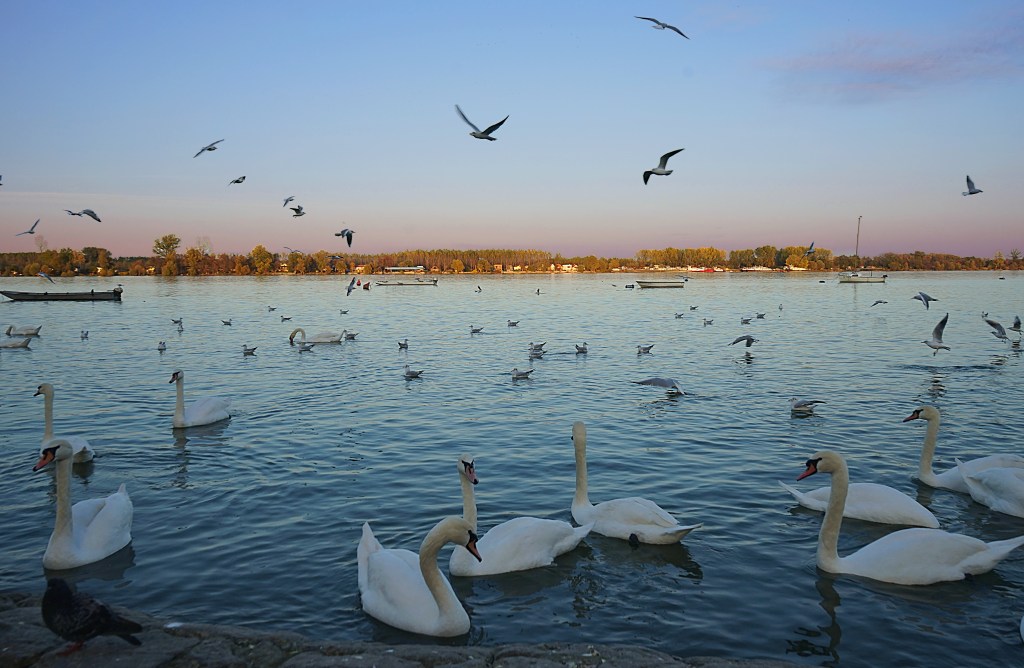
The history of Serbia is a history of battles. From the first Slavic migrations under the Byzantine Empire fourteen hundred years ago to the Balkan wars of the 1990s, this land has been ravaged by religious warfare and atrocities. Located on a strategic crossroad at the confluence of the Danube and Sava Rivers, Belgrade has seen more than one hundred wars and it has been destroyed and rebuilt 44 times.
Serb identity is based not on language or ethnicity so much as religion and politics. Centuries of religious persecution and struggles have shaped the way the Serbs view themselves and how they are perceived by others.
The people of Serbia, Croatia, Bosnia and Montenegro are essentially the same. They are ethnically identical and they speak the same language. Why, then, are they so apart from each other in terms of national identities? And why have they fought each other for centuries? The answer is religion.
The South Slavs first migrated from Poland into the Balkans in the centuries after the fall of the Roman Empire and populated the areas stretching from Bulgaria to Slovenia. The migrants arrived as a single ethnicity, but their split had already been decided a couple centuries earlier by the Council of Nicaea which had decreed that the Christian world would be divided along the Drina River that runs between Bosnia and Serbia. Administration west of the line would go to Rome with Latin being the language of the Church and east of the line to Constantinople with Greek. In this way, the South Slavs were divided as soon as they settled.
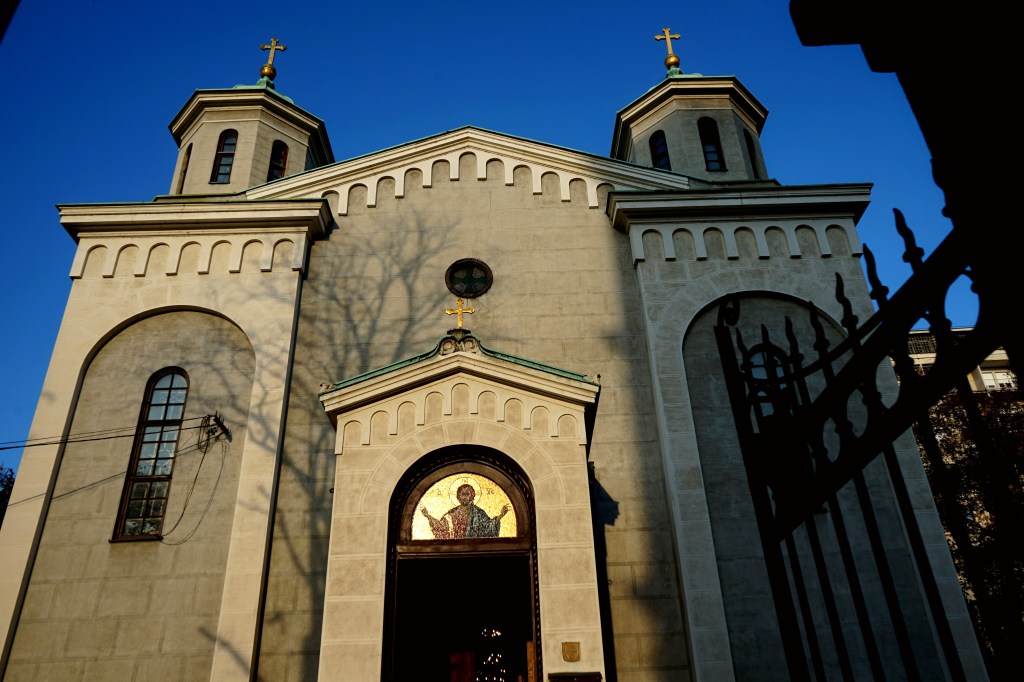
As the centuries marched forward, the divisions between the eastern and western churches grew more distinct. The priests in the eastern churches didn’t like that the priests in the west shaved their beards. The clergy in the western churches didn’t like that the eastern clergy weren’t celibate like themselves. On top of these disputes was the all important question of whether the holy spirit of the trinity comes from God alone or from both the father and the son. This question would divide cultures and result in centuries of violence and hatred.
The Slavs of the west became Catholics Croats. Those in the east became Orthodox Serbs. The Bosniaks, located between the two, became Bogomils, a sect of Christianity considered heretic by Rome. When a violent campaign to exterminate them was enacted on behalf of the Church, the Bosniaks invited the Ottomans to take over their defenses which resulted in their eventual conversion to Islam. In this way, one people became divided into three by way of religion.

Serbia itself almost became divided further during the middle ages. In 1202 the Catholic king of Hungary invaded Serbia and replaced its Orthodox king Stefan Nemanjic with his brother who had converted to Catholicism. The country could have devolved into chaos if not for a third brother, Sava, an Orthodox monk who founded the Serbian Orthodox Church and reunited the brothers under the religion. By nationalizing the religion, Sava rescued the idea of Serbia as a nation and provided the basis for the national identity that exists today.
The next centuries would not be easy to the Serbs in either of these areas, however, as both would be severely threatened by the Ottoman occupation that would come in 1459. Serbia effectively disappeared, Belgrade became a Turkish city and the Serbs became a persecuted, stateless people for much of the next four hundred years.
During these difficult centuries, the idea of a Serbian homeland was sometimes referred to as the “new Israel.” The Serbs identified with the Israelites of the bible, casting Saint Sava as their Abraham and the Serbs as God’s “elected people.” Over the centuries this idea developed into a nationalistic fervor that resulted in numerous uprisings and battles against the Muslim rulers. The Ottomans, in turn, declared holy war against the rebels and began a campaign of terror and repression against the Serbs. Populations shifted during these periods of war, with many Serbs moving west of the Drina River into safer lands.
For centuries Serbia was only an idea, the “promised land” that would one day be returned to them. This eventually came to fruition after numerous rebellions and in 1878 Serbia became an independent nation. With Ottoman power waning, the Austro-Hungarian Empire occupied the Ottoman province of Bosnia, eventually annexing it in 1908. Nearly half of the population at this time was Serb.
The appeal of an independent Serbia to the people in Bosnia and Croatia was a threat to Austria-Hungary as many people in the three Slavic countries idealized an independent South Slav union. The Austro-Hungarian authorities in Croatia and Bosnia actively worked against this, encouraging feuds between Serbs and Croats and emphasizing the difference between religions. They persecuted Serbs in Croatia and Bosnia and were itching for an excuse to invade Serbia.
In 1914 they got just that. A South Slav nationalist group in Bosnia dedicated to bringing about an independent union of Serbia, Bosnia and Croatia assassinated the visiting Archduke Franz Ferdinand, the heir to the throne of Austria-Hungary. Although the members of this group were from Bosnia and included both Christians and Muslims, the man who pulled the trigger was Orthodox and therefore a Serb in the eyes of Austria-Hungary. Evidence seems to show that the Serbian government had nothing to do with this attack, but nevertheless Austria-Hungary launched an invasion into Serbia almost immediately. This was, of course, the start of the first World War.
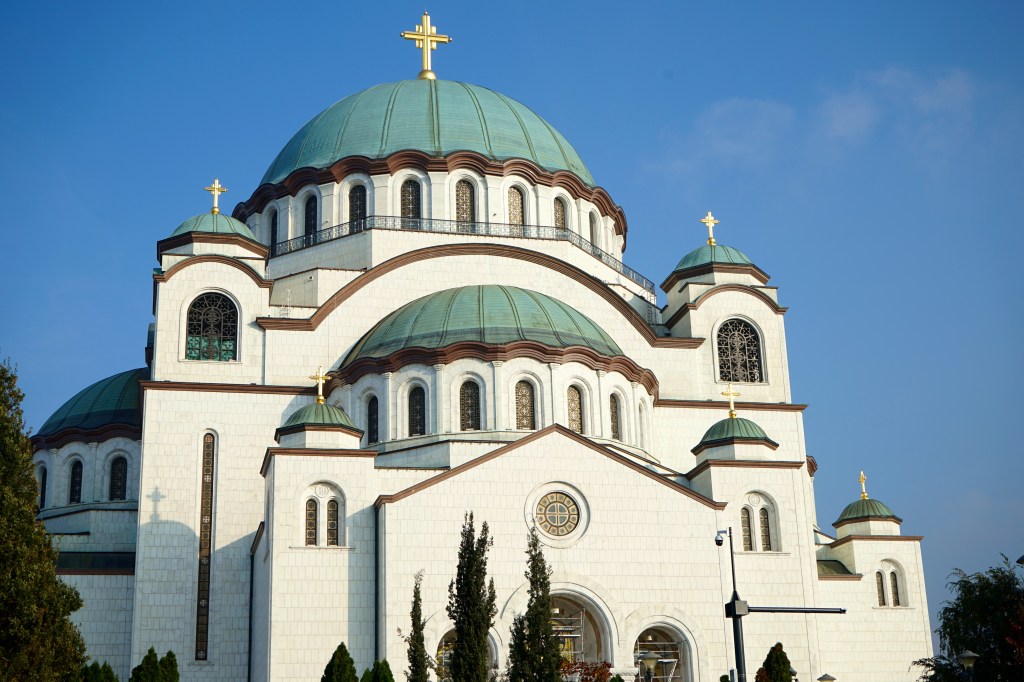
Walking home from another day of visiting museums, Tola noticed some old men fishing along the bank of the Sava River. She stopped and ask one of them if he would sell her some fish. He gave her his whole catch of five or six decent sized live ones for 100 dinar ($1).
A group of Afghan refugees noticed our conversation with the fisherman and came over to talk with us, happy to find someone who could speak English. They were illegal refugees hoping to find a way into Europe. Their temporary home was in a park around the corner where hundreds of Muslim refugees slept in the grass and wrapped themselves tightly in blankets to stay warm.
Thousands of Muslim migrants and refugees pass through Serbia and it is, interestingly, one of the countries in which they are treated most humanely. The government has set up camps for them and provided food. Neighboring Croatia and Hungary, meanwhile have been criticized for building walls and detention camps and as well as being cruel and violent towards these people. Maybe the past centuries of Serbian history, the hundreds of years of being stateless, of fleeing wars and experiencing persecution has been ingrained into the psyche so much that Serbs have a compassion for these people based on their own history.
As for us, we had no plans to come to Serbia, but now that we are here it is very tempting to stay. And maybe I will be able to drag the kids to a few more museums when I get the chance.
 ADVENTURE-SOMEWHERE.COM