

Located high above the Gulf of Corinth on the steep slope of Mount Parnassus is the center of the world. For many centuries pilgrims, generals and kings made the journey here to receive the advice of gods.
The history of the Oracle at Delphi is shrouded in a cloak of myth and stories buried under many millennia so that arriving at the gates of Delphi almost feels like coming to a mythical land.
When the Romans conquered Greece some 2200 years ago, Delphi was already an ancient and mysterious religious site. The Oracle is also mentioned in the texts of the Iliad and the Odyssey. For many centuries the priestess who served as Oracle was the most powerful woman in the world. Her advice was followed by kings and city states and there were even times she was bribed to influence events by her advice.
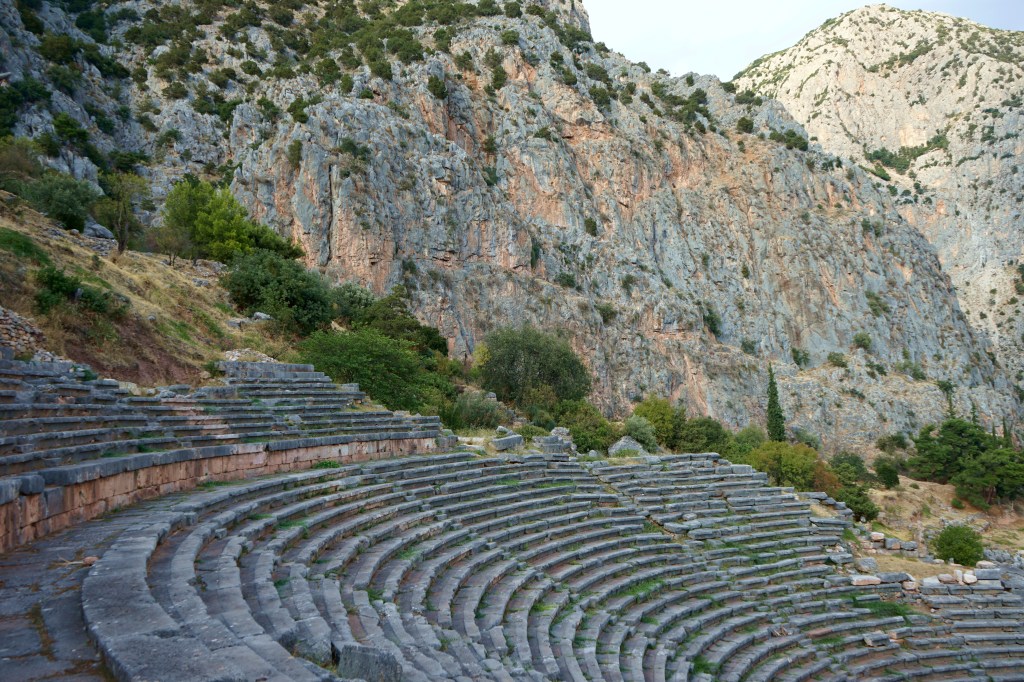
The priestess may be long gone, but getting to Delphi is still a pilgrimage of sorts. We drove along windy back roads from Athens, arriving in time to climb the slopes of Parnassus to see the ruins of this once powerful place under the rays of the late afternoon sun.
Everything here feels a bit magical. The spectacular mountain setting may be part of it, but most of the magic comes from within the imaginations of those who come here. It comes from the thousands of years of history, stories and myths of Delphi.
The Oracle spoke for the god Apollo from the Temple of Apollo at Delphi and she knew everything, even “the number of the grains of sand.” Representatives of the Greek city states from far and wide would make the journey here if there was an important issue on which they needed a decision.
Sometimes, though, she offered prophecies that could be difficult to interpret. Sometimes they were even riddles in which there was no obvious answer. As chronicled by the historian Herodotus, the king of Lydia asked the Oracle if he would be successful in war if he attacked Persia. The Oracle replied that if he did, he would “destroy a great empire.” Emboldened by this prophecy, he invaded Persia only to find that the great empire to be destroyed would be his own.
Sometimes the interpretation of the words of the Oracle provided more profound wisdom that the words themselves, and this may be where the true power of the Oracle lies. Socrates, while pondering why the Oracle said that there is no man wiser than Socrates himself, interpreted this to mean that his knowledge of his own limitations made him wiser than those who pretend to know more than they do.
Only by knowing oneself could one find the answer in the ambiguous prophecies of the Oracle.
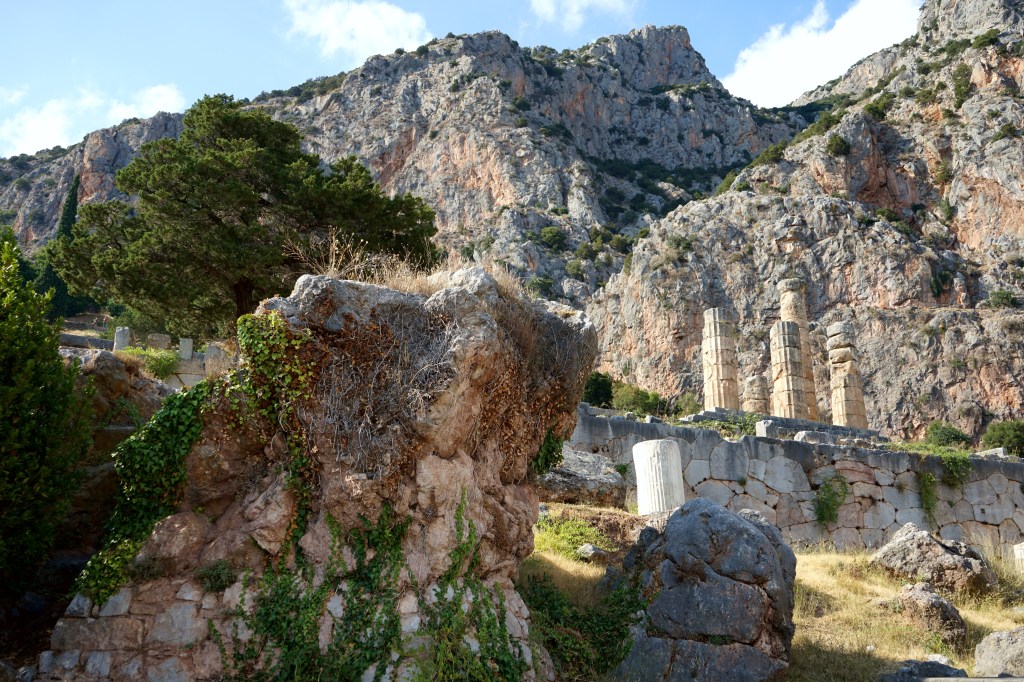
Sybil Rock is not especially prominent among the ruins of the many sanctuaries of Delphi, but it is where the prophecies began. Somewhere between three and four thousand years ago, the first priestess issued prophecies of Gaia from atop this rock. Only in later years did Apollo take over for the Earth Goddess and only then were temples and sanctuaries built here.
After thousands of years of words of wisdom from the gods, the Oracle was silenced in the fourth century when pagan religions were outlawed. The temples and statues were were destroyed so that only ruins and whispers remained.
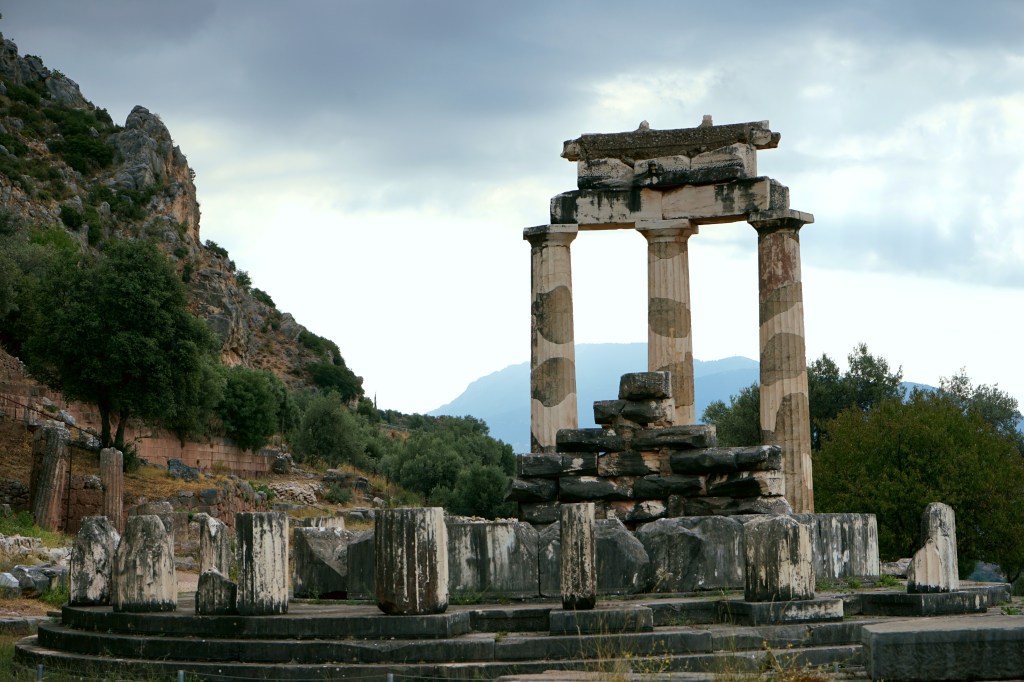
The shadows grow long from the few standing pillars of the Temple of Apollo and a cool breeze flows over the hillside like a whisper. And I can almost hear the Oracle, but the words are too faint to make out. But the words don’t really matter anyway. We are always left to our own interpretations whatever they may be.
 ADVENTURE-SOMEWHERE.COM
Been there and your excellent – interesting and fantastic writing brought back such great memories = thanks – tell me about kids – their reaction to the Greeks – weather? next stop? any problems? love you n
LikeLike
Just reviewing your pictures and my…. Are they good. You may not go this far back but sometimes it helps to reniew enthusiasm even if you don’t need it for say, travel. Love you lots nancy
LikeLike