
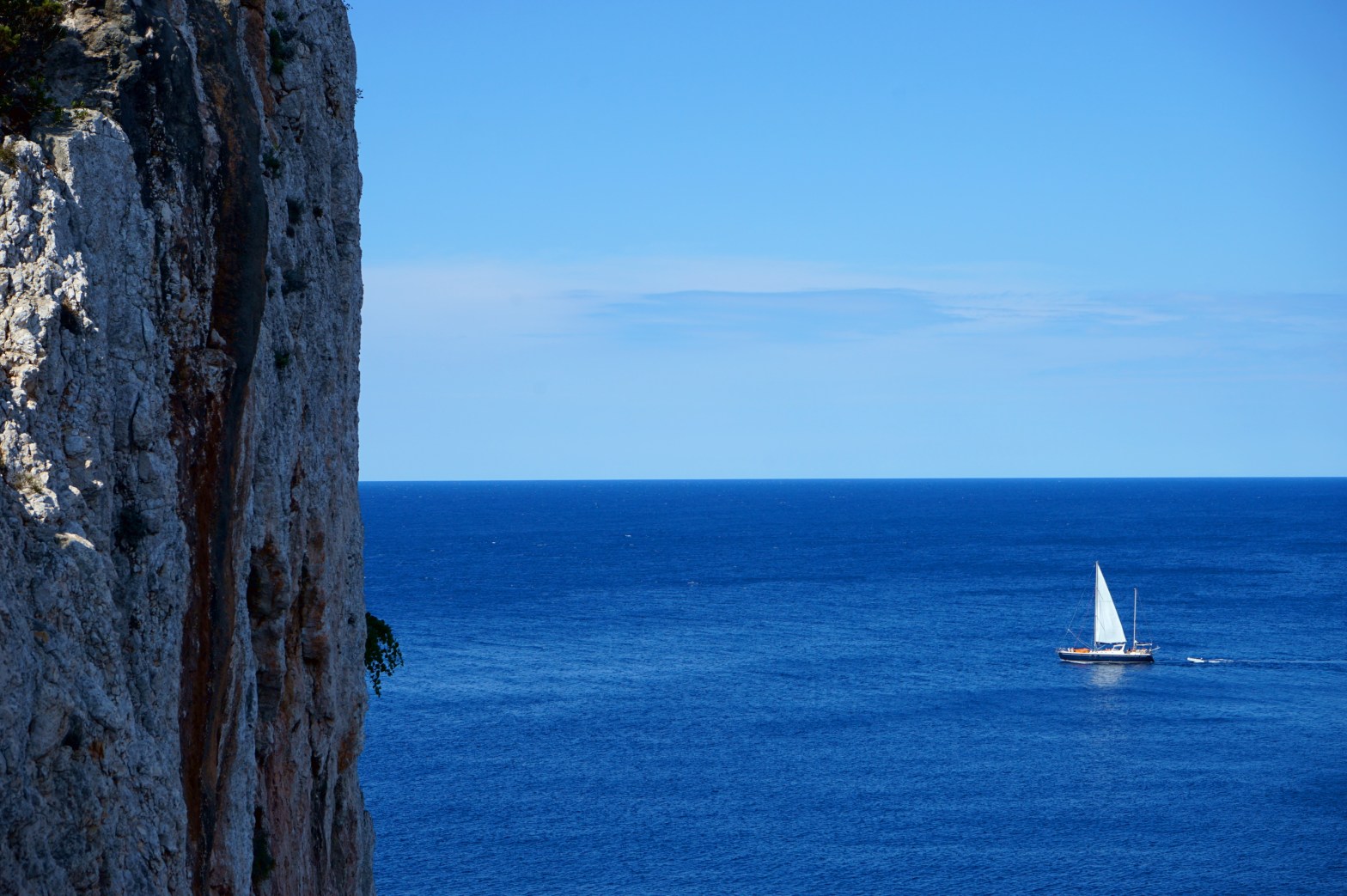
Lefkada became an island some 2500 years ago when Corinthians settlers built a canal through the narrow strip of land on the north tip that connects to mainland Greece.
A pontoon bridge now connects the island to the mainland and it was over this that we drove on our way to Lefkada town. A crumbling fortress and lighthouse overlooks this only land entry point onto the island. The town was built by the Venetians, but controlled by French, British and Turks at various times since then and it is some of the very little low-lying land on the island. Beyond the town the road climbs into the hills. Most of the island is hilly and steep, or even vertical as white cliffs crash down to the waves below.
We stayed in the small house of a retired couple in a small village on the island. They moved here, her home village, from Athens after his policeman’s pension was cut due to the economic crisis and her city bookshop closed. It’s a simple life on the island. Upon arrival they give us an assortment of their home produce such as a sweet lemon jam and a vinegary sweet wine.
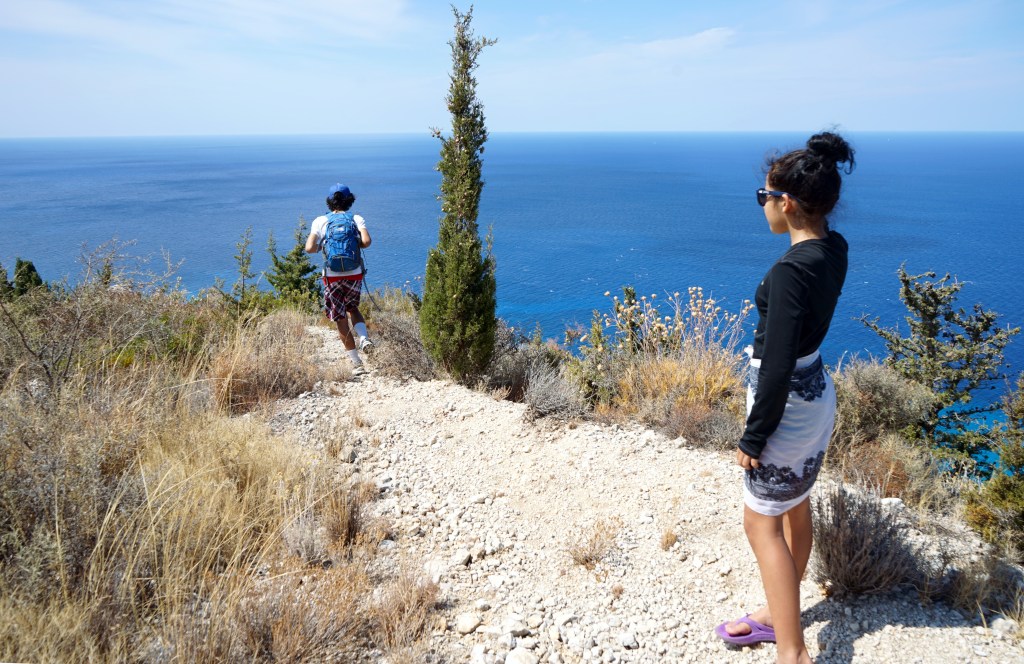
The sea seems to wait just under the village and so we set out on foot, walking through olive groves to a steep trail that leads through rocky vegetation and thorn bushes. It’s a hot day and the kids just want to swim, but the closer we get to the sea, the farther it seems to go until finally the path just disappears over a steep cliff. The view is amazing, but the beach is still miles below.
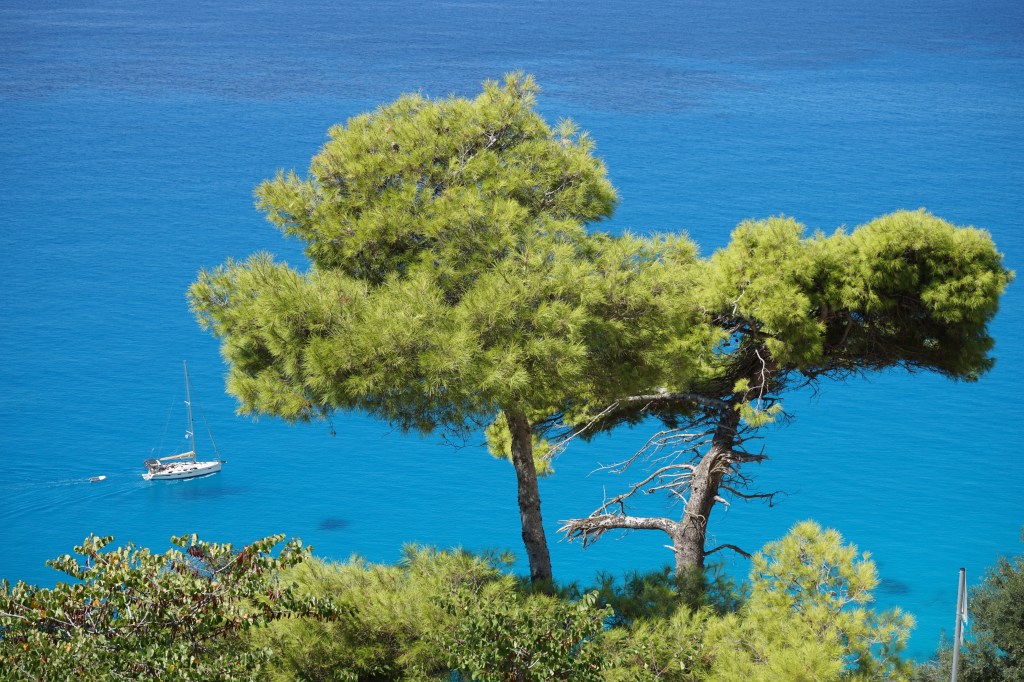
Most of the Lefkada beaches are difficult to reach. Wild vegetation and steep cliffs separate the villages from the waters below. Glimpses from above feel like a drone view of perfectly colored blue and turquoise below.
The most famous and beautiful beach on the island, Egrimini, was destroyed by an earthquake in 2015. Already difficult to reach, the 6.5 magnitude quake caused the cliffs to collapse and bury the popular stretch of sand. Since then, the waves have cleared much of the debris and a new stairway has been built down the cliff side, but it is still a 30 minute walk to get down. The sand is littered with fallen boulders and dead trees, but the water is perfectly clear like an endless swimming pool.
Homer was referred to as “the Poet,” and Sappho was “the Poetess.” She was maybe the most renowned poet of the ancient Greeks. Of her many works, only a single poem remains intact, her “Ode to Aphrodite,” in which she implores the Goddess of love to “release me from distress and pain.”
According to legend, Sappho threw herself from the cliffs of Lefkada in despair over unrequited love. Like many legends, it probably isn’t true. The real life of Sappho, like most of her poetry, has been lost to time. But the imposing cliffs of Lefkada are the kind of awe inspiring feature of nature that would inspire such stories.

Many of the beaches on the island are not accessible at all except by boat or swimming. The retired policeman that owned our rental house advised us to visit a nearby beach. “It’s the best on the island,” he told us. “It’s sandy and the access is easy.” This is not my kind of beach. Instead we found ourselves day after day climbing down steep cliffs to the waters below.
Small sandy coves that can only be reached by swimming hide in the shadows between cliffs and, even better, fascinating dark caves and natural tunnels disappear into the cliff side, some of which can only be reached by diving under the water and surfacing in subterranean pools within the mountain.
The beach of Porto Katsiki was a perfect starting point for adventure as the many miles of coast south from there is nothing but cliffs and coves spaced apart perfectly for rests on a long swim.
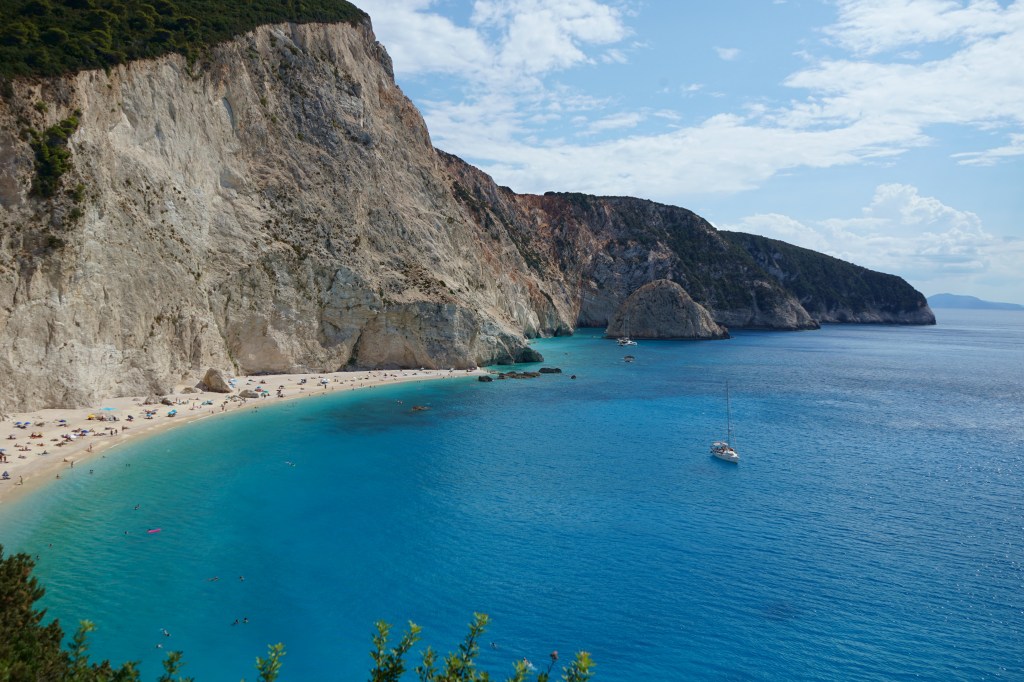
Lefkada Island may have the clearest and most beautiful waters of anywhere in the Mediterranean. It also has beautiful sandy beaches and idyllic little villages. But the Lefkada that sticks in my mind is the the Lefkada of high cliffs and dark sea caves.

 ADVENTURE-SOMEWHERE.COM