

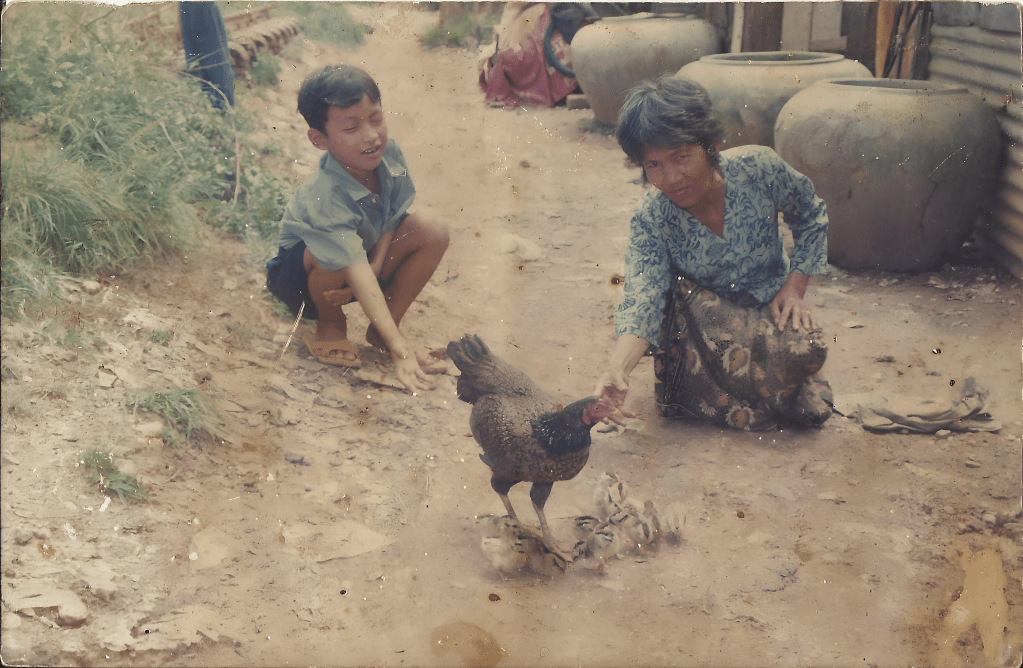
I found the slums of Phnom Penh beautiful in their way decades ago when I was first in Cambodia. It was a chaotic collection of wooden houses on stilts with tin and thatched roofs surrounding a swamp, and narrow dirt pathways meandered through the lives of the people that lived there, chickens pecking at the dirt, children playing in the dirt, neighbors standing around gossiping. People planted fruit trees, raised pigs and opened small shops from their home. It was a community in the center of the city in which everyone knew each other closely like a big family.
Camera in hand like a tourist, I ventured the other day into what remains of where I once lived and a wave of nostalgia for the past hit me as I realized how much of it is dead and gone.
A long strip of wooden planks once led across murky water to a roughly walled outhouse in the middle of the swamp that served as the toilet for most of the neighborhood. It was heavily trafficked and if anyone took too long behind the flimsy corrugated metal door, an impatient neighbor might bang pebbles off the walls of the outhouse to give notice they needed to get in. The swamp has long been filled in and a 45-story shopping mall and luxury hotel is now in it’s place.
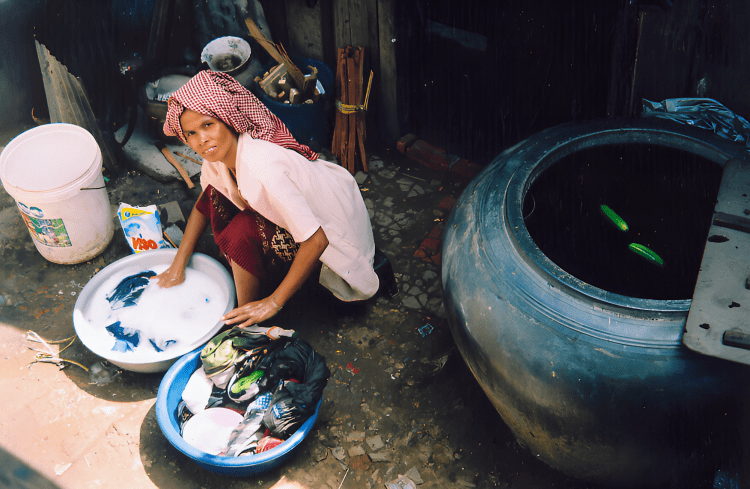
I have countless memories of life in a two-story tin-roofed house that I lived in for some time with Tola and her family. It was the nicest house in the neighborhood, but still quite simple. There was no bathroom when I first lived there. We would shower in the alleyway dressed in a krama or sarong by pouring water over ourselves from a large clay jar that collected rain water. And a trip to the toilet meant a perilous journey into the swamp. Locals in the neighborhood would sit out front and call me down for a drink of rice wine as soon as they saw me get up in the morning. It felt nice to be part of a community like that. I’ve never experienced anything like that before or since.
Phnom Penh was emptied of its population by the Khmer Rouge in 1975 and once they were ousted people slowly began to move back into the city and could claim land or an abandoned home for themselves. Tola’s family moved to Phnom Penh in the early 1980s and found this neighborhood in the center of the city to be quite appealing because they could build their own houses, raise chickens and grow vegetables and fruits. But in the 2000s in Cambodia, as the city slowly developed and land values increased, people began to be forcefully evicted from communities like this. Numerous slums around the city were burned down.
In 2005 we faced numerous scares of fire while we were living here. One time the neighborhood watch banged the warning drums in the middle of the night and everyone began to flee their houses, valuables in hand. I made my way out carrying my son who was just months old at the time and decided then that we would have to move. Eventually, everyone was forced to sell to a developer who immediately bulldozed the area and then let it sit for over a decade. I found that the exact spot of the old house is now a parking lot.
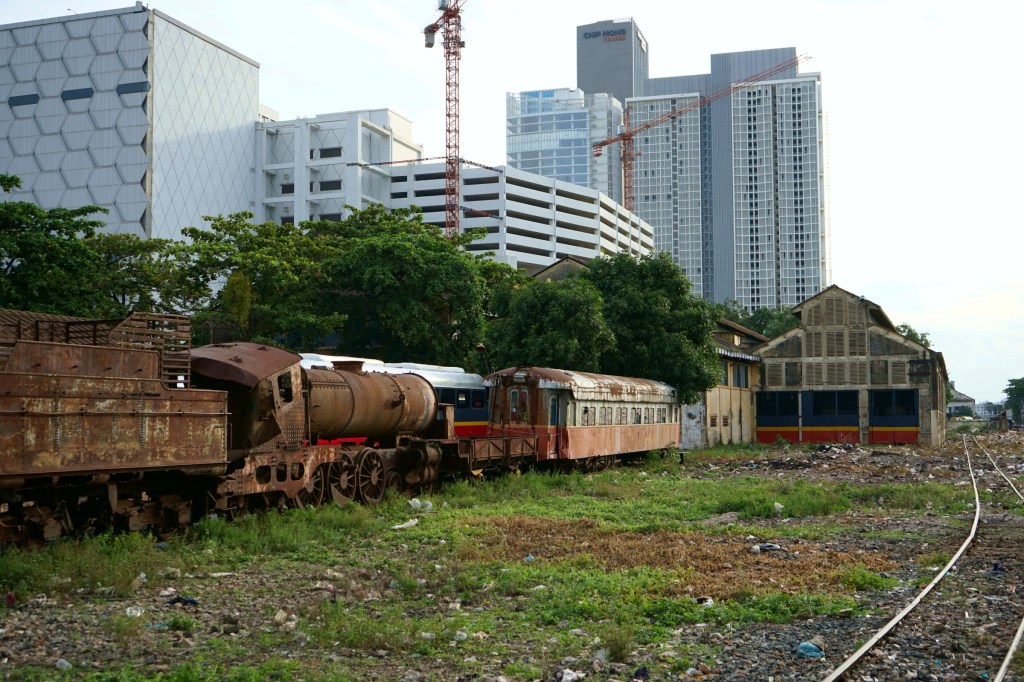
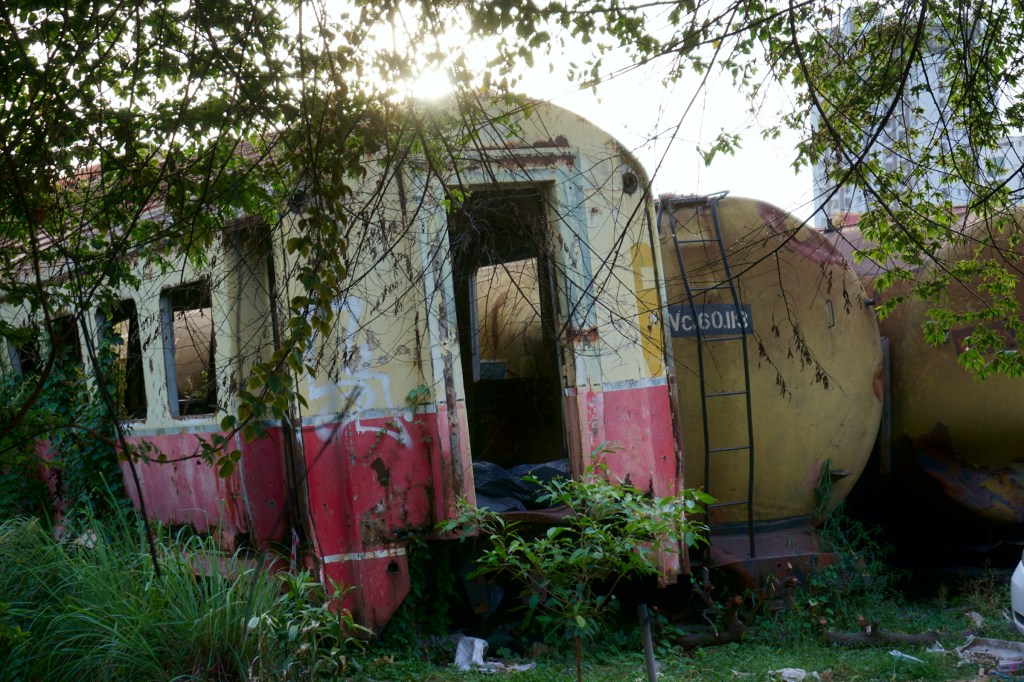
I was married in the old train depot just in front of the house. It was a traditional two-day wedding with hours of ceremonies, many changes of clothes and finally a big party at the end. The train depot still remains, even some of the abandoned train cars, damaged by Khmer Rouge attacks in the 1990s, still sit there rotting. But a wall has been built around it and it’s not the same place without the surrounding community.
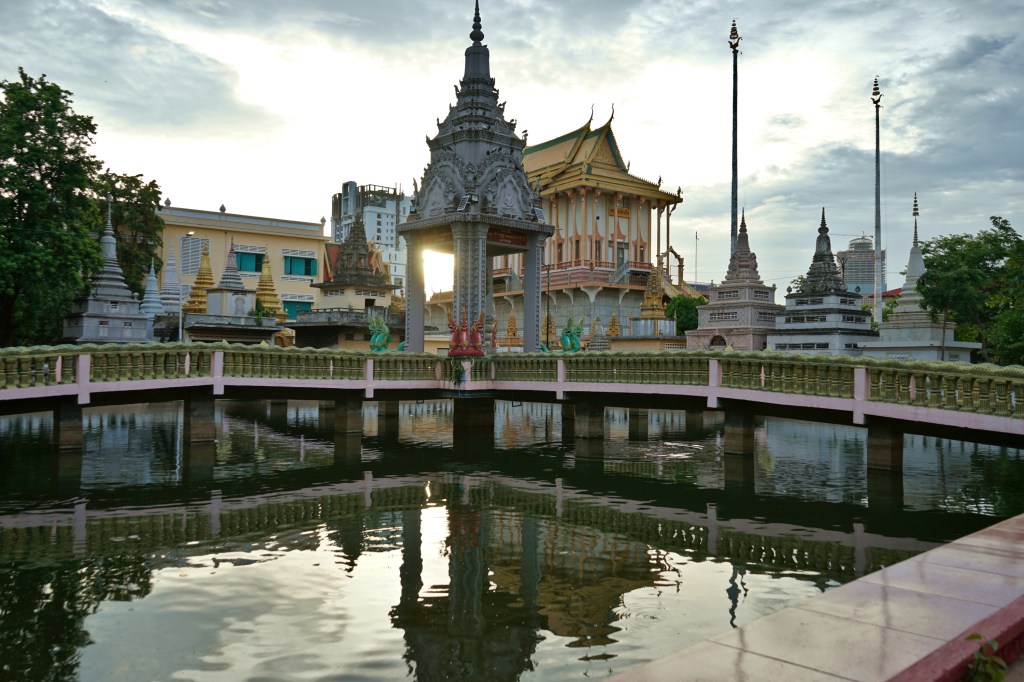
The area has changed so radically that I wouldn’t even know how to orient myself if not for the temple. It was the landmark of the neighborhood then as it is now. All the people that lived here are gone, the houses are gone, the atmosphere of the place is gone. But the temple remains.
It makes me feel nostalgic for the way life once was. Like this former neighborhood of Phnom Penh, the landscape of my life is something else completely from what it was as I find myself traveling alone with my daughter and kind of unsure of what to do next. I’m reminded again and again of the past and it’s difficult not to feel sad thinking about how much of that past is gone. But, despite the old neighborhood disappearing and the old way of life changing, there’s something still there. Along the train tracks and between high rises, some of the old slum communities remain. Men sit on the tracks playing board games, kids chase a man pushing a ringing cart selling ice cream, people chat with their neighbors and live their lives. Life goes on.
 ADVENTURE-SOMEWHERE.COM