
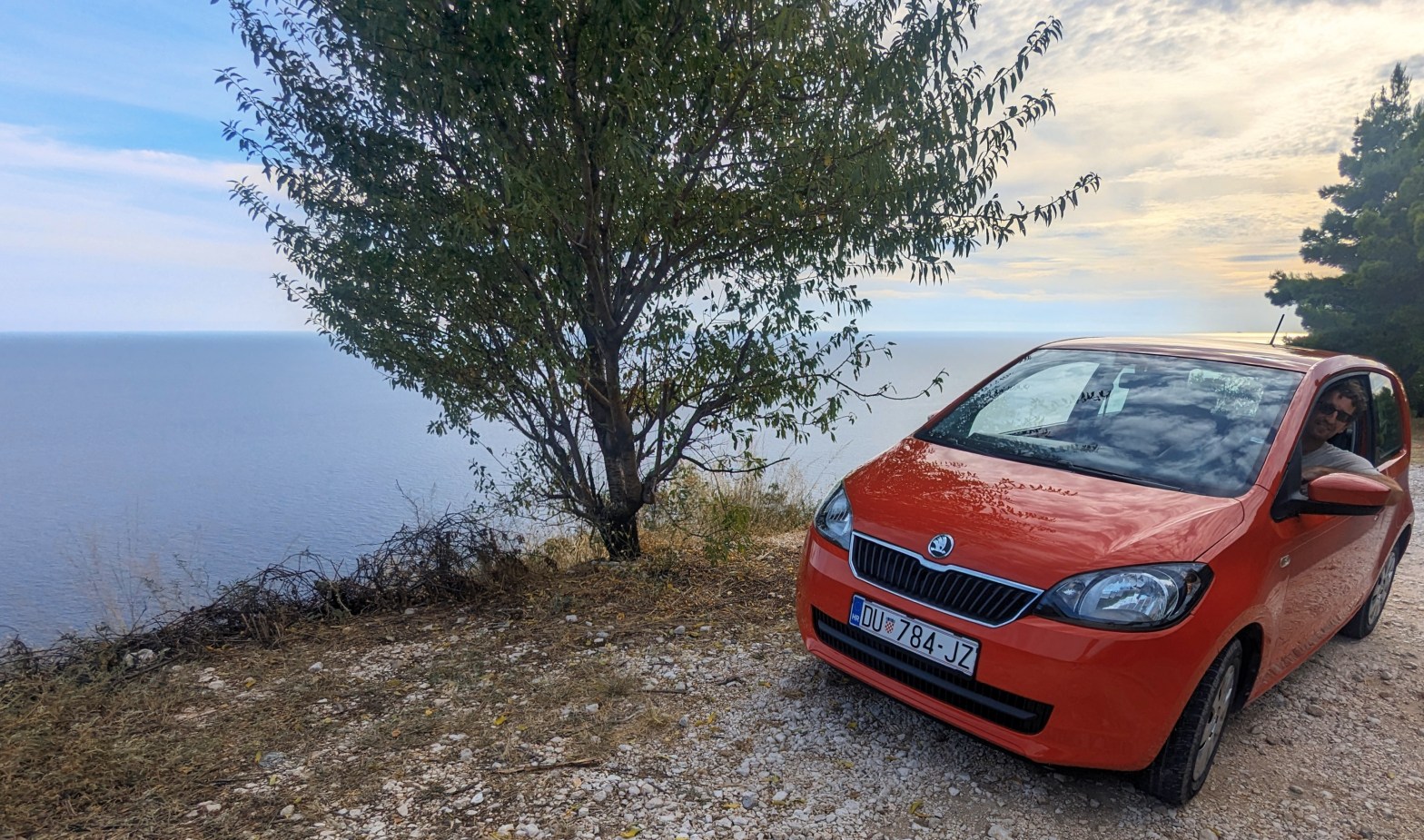
Imagine an undeveloped island in the Adriatic, one covered in hilly forests and surrounded by clear turquoise waters. Throw in a few idyllic fishing villages, maybe a medieval monastery and a couple of lakes hidden in the hills and you have the island of Mljet, Croatia’s greenest island.
Stretching 37 kilometers from one end to the other, about a third of the island is designated a national park. Much of the rest is just as beautiful though, with a single road running up steep forested hills, along cliffs that drop steeply to the blue waters below and down again to small villages nestled on coves and sandy beaches. It would have been easy to spend all our time here swimming, eating at the village restaurant and exploring the bay by kayak. But we also decided to rent a car and travel the island from one end to the other.

The south side of the island is lined in rocky cliffs and it is said that some 3000 years ago Odysseus accessed the island through a sea cave that breaks through the hostile cliffs to the softer interior. We hiked to the cave from the largest village on the island, with a population of 270 people, on a trail that descended through numerous olive groves that eventually gave way to steep rock. Here we could see the cave and a perilous climb down into it that had been fenced off. Instead, a concrete path had been made along the rock to reach the water side of the cave.
Shipwrecked in a storm, Odysseus swam to shelter in the cave and was saved by the sea nymph Calypso. The Odyssey describes the island as lush and beautiful, which is certainly the case for Mljet.

There doesn’t seem to be any kind of consensus outside of the Croatian tourism board though that the island of Mljet is Calypso’s island. Geographically it’s location seems to be a bit far from where it is typically assumed that Odysseus traveled and there are a few other islands in the Mediterranean that are contenders. The physical description of the cave and beauty of the island seems to fit though and a number of historians have put the location of the island northwest of Corfu, so that seems to fit as well.
Hot from our hike, we jumped from the rock into the water and swam to the cave. The contrast of the bright rays piercing deep into the clear dark waters inside the cave made for a brilliant light show. And even more exciting, it was possible to jump from ledges on the cliff edge into the deep blue water.
Unfortunately, one of my biggest fears in cliff jumping came true. I jumped three or four times without problem, but then on that final jump my mask came off.
I dove down as far as I could, far enough to see the mask on the bottom even half-blind as I was without wearing it, but not far enough to reach it. The water is deep here and as much as I wanted to, I just couldn’t push myself the final few meters to the bottom.

Continuing our drive to the north side of the island, we hiked alongside two lushly forested lakes in the national park. There is a medieval Benedictine monastery on an island in one of the lakes and there are numerous hiking and mountain bike trails through the national park.
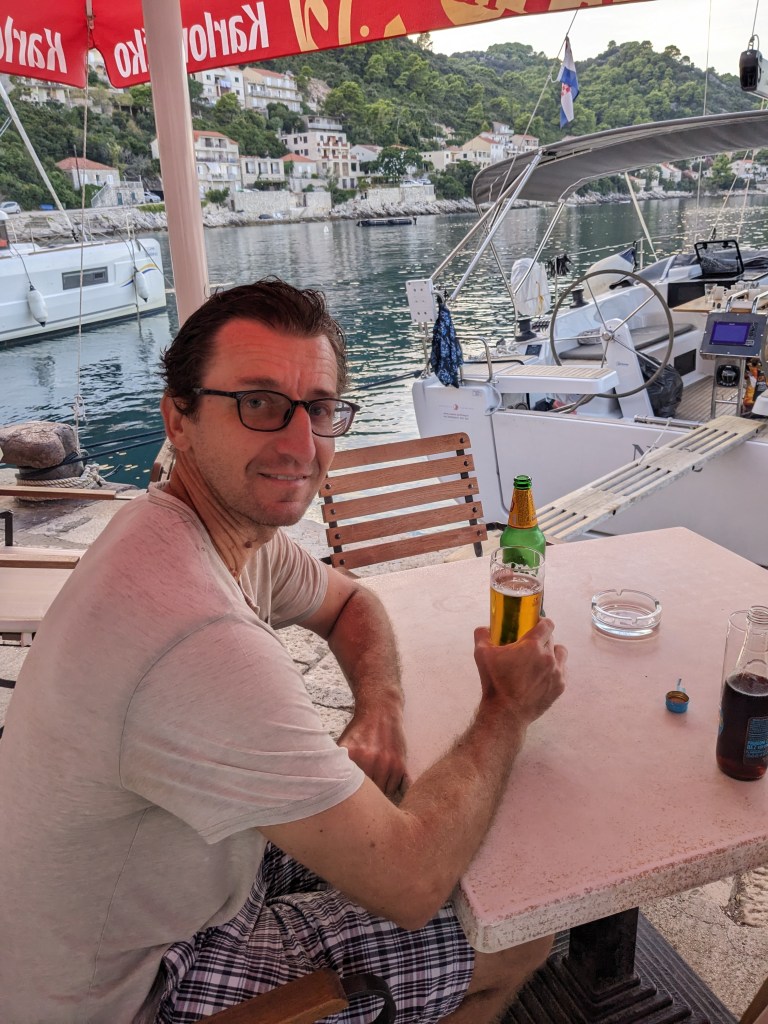
Odysseus spent seven years on the island, trapped in paradise. We only had three days on the island, but I probably wouldn’t mind to spend seven years on Mljet. The kayaking, swimming and hiking are nice. But the most enjoyable part of being on the island is the peace of being somewhere beautiful and quiet. Maybe the monks in the monastery have the right idea, although I prefer my quiet reflection to be on the bayside with a cold beer.
 ADVENTURE-SOMEWHERE.COM