
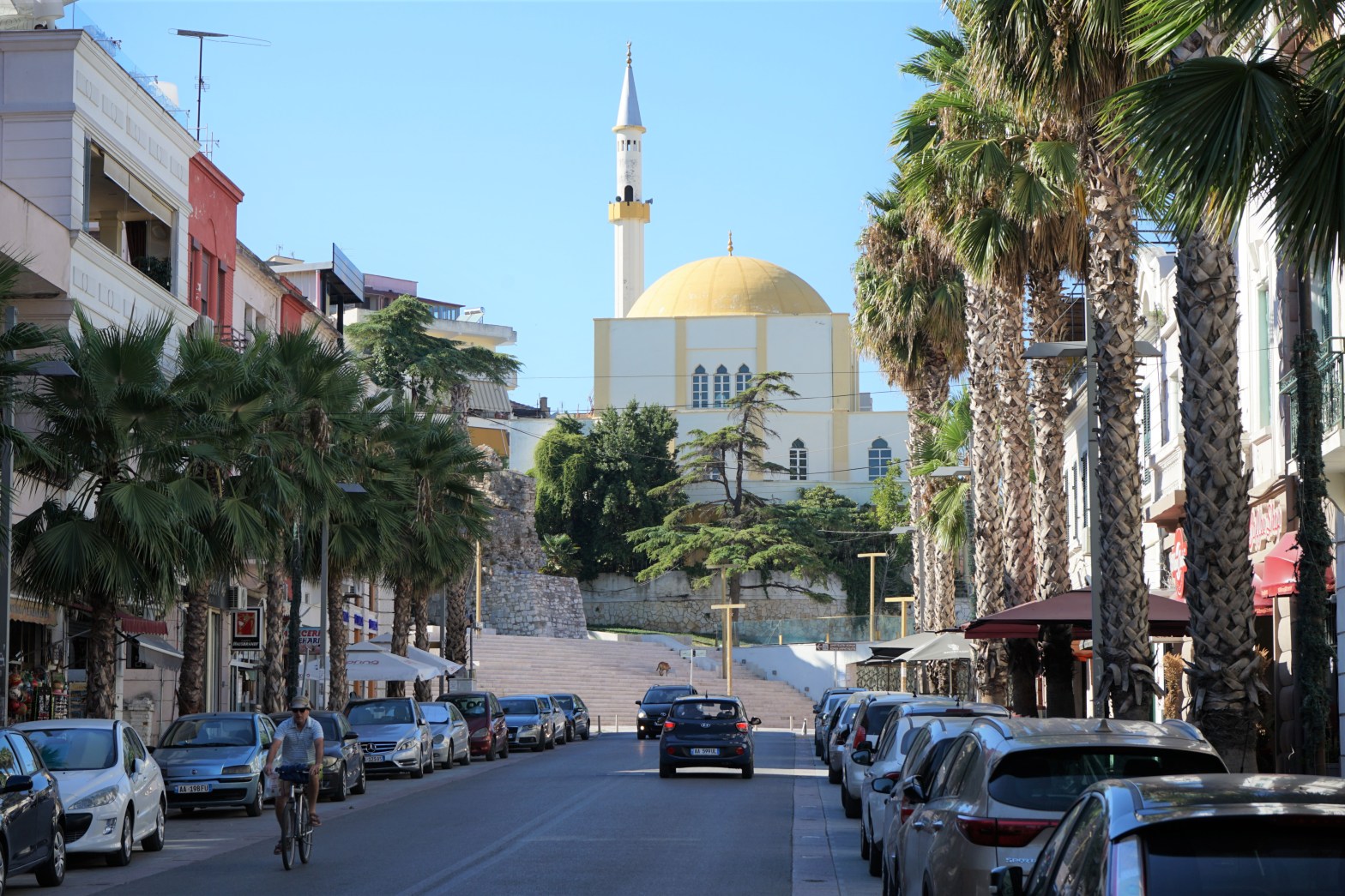
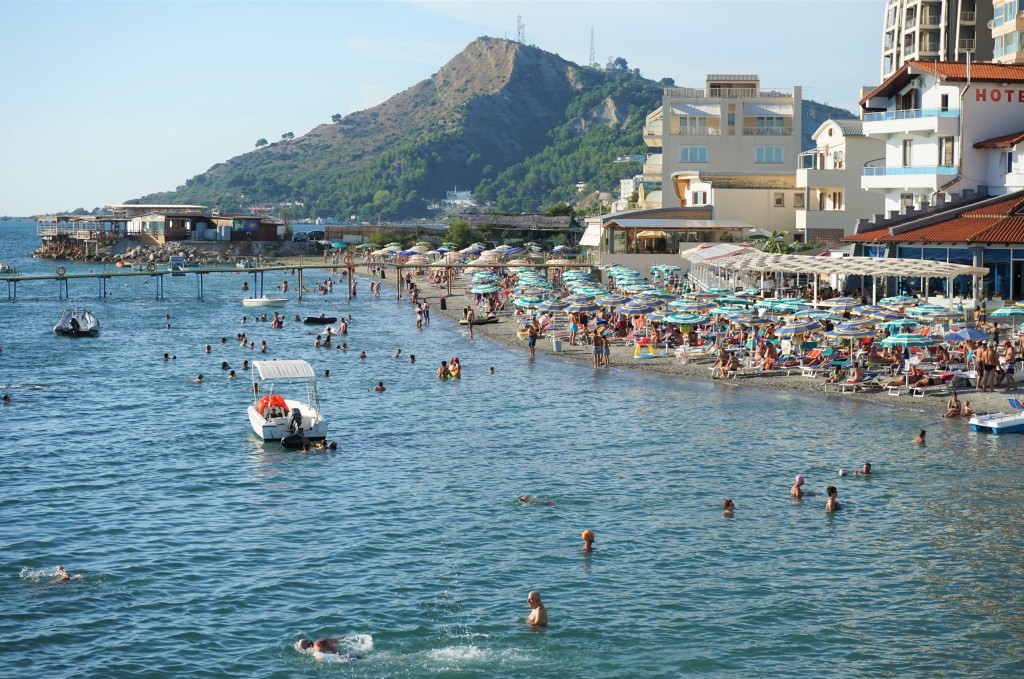
A crane loads colorful containers onto a cargo ship as traffic slowly twists around the old Venetian tower and onto a palm lined boulevard. Crowds walk along the sea front promenade as the sun sets in a pink blaze over the rippling water. A lone fisherman sits just off shore in a rusty pedal boat winding in his line. And I sit down at an outdoor cafe and order a makiato while my kids hover over the ice cream display.
This is Durrës, an Adriatic port city in Albania that has been here since it was founded by Greek settlers nearly 2700 years ago. For 400 years the city existed as independent city state devoted to Aphrodite, the Goddess of Love. It produced its own currency and left behind an assortment of artifacts and terracotta statues that can be visited in the amazing archeological museum. New artifacts continue to be found randomly around the city by construction workers and people digging in their gardens.

Eventually the Romans captured the city, renaming it Dyrrachium, and it grew into the largest port of the eastern Adriatic. The amphitheater was the largest ever built in the Balkans and it could hold a crowd of 20,000 people. Today it can be found nestled in the center of the city with a number of houses built directly on top of parts of it. My family and I were the only people there as we wandered the tunnels below and the admired the view of the arena from above.
The city wasn’t much affected by the fall of the Roman Empire. It continued being an important port and continued to grow as part of the Byzantine Empire. Many of the columns of the impressive 6th century remains of the Byzantine forum still stand, exhibiting the circular structure of what was once a great public space and market at the center of the city.

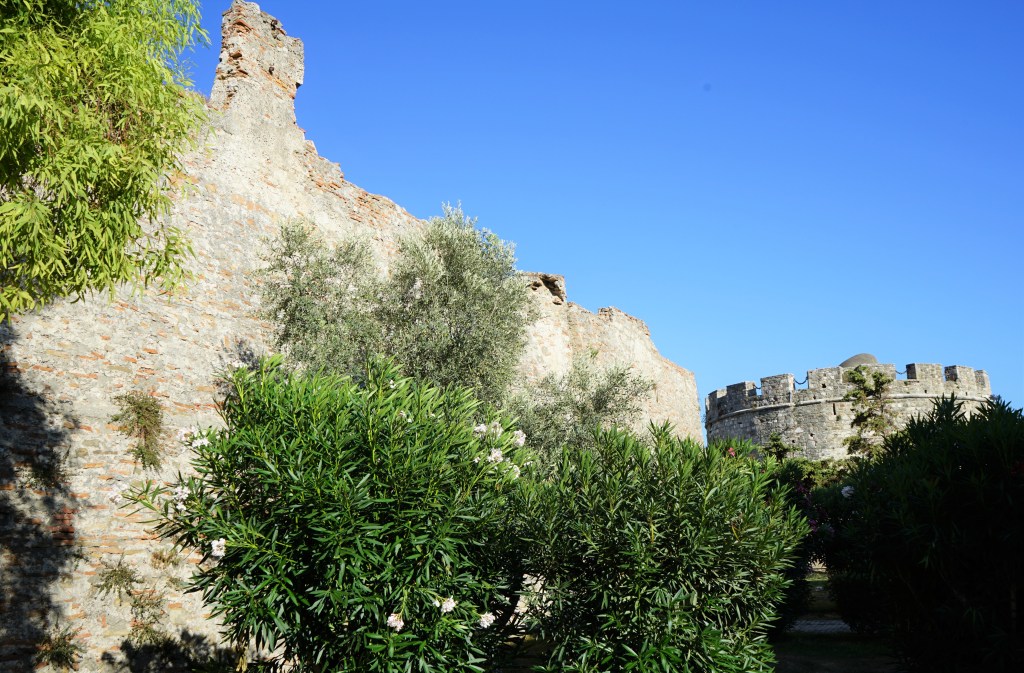
The decaying ancient walls of Durrës form a barrier between neighborhoods in places, still a living part of the city in a way. Elsewhere they simply stand in pieces, a remnant of the past. They are said to have once been so wide that three horsemen could ride side by side along the top. Built 1500 years ago, the fortifications were devastated by an earthquake in 1273 and rebuilt. Another earthquake last year toppled part of the wall and a tower which now sit in a rubble pile waiting to be restored. Most impressive, a section of the wall runs through the center of 15-floor modern building that has been built around it, with the wall running right through a stylish wine bar.
For many hundreds of years the city was known by its Italian name of Durazzo. The Venetian Republic controlled the city for much of the middle ages and their influence can still be felt in terms of architecture and culture. The Ottomans captured Durazzo in 1501 and remained in power until the 20th century. This long history of disparate influences has left the city dotted with Orthodox churches, Catholic cathedrals and Islamic mosques.
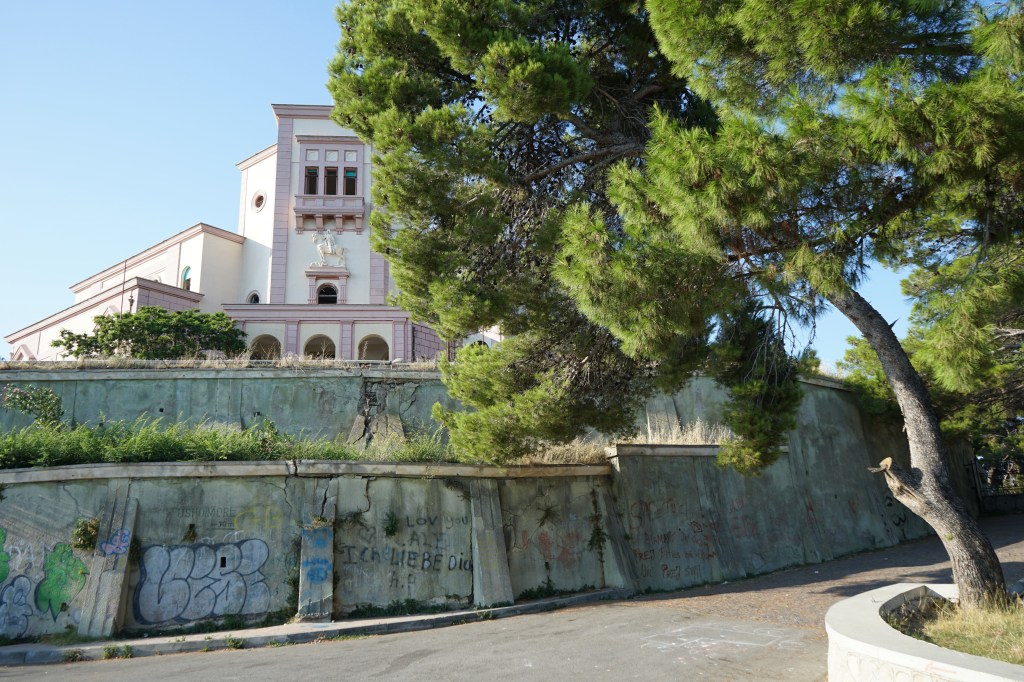
Durrës became a free city for three days in 1912 before it was occupied by Serbian forces. Italy invaded in 1915 and then Austria-Hungary took over between 1916-1918. The allies bombarded the city in 1918, devastating the population and destroying much of the old town. When the world war ended, Albania became an independent kingdom with Durrës the capital.
World War 2 brought more strife as Italy annexed Albania and then the Germans invaded in 1944. By the end of the war the city was once again in ruins and the port was destroyed. It was rebuilt during the communist period and even briefly renamed after Albania’s long-term ruler, Enver Hoxha.
Today Durrës is a city with a bit of grit in its busy port, derelict buildings and decaying facades, but also quite a bit of charm in its diverse architecture, scenic promenades and outdoor cafes. All of this sits on thousands of years of history and culture.
 ADVENTURE-SOMEWHERE.COM
Very interesting and enjoyable post.
LikeLike