
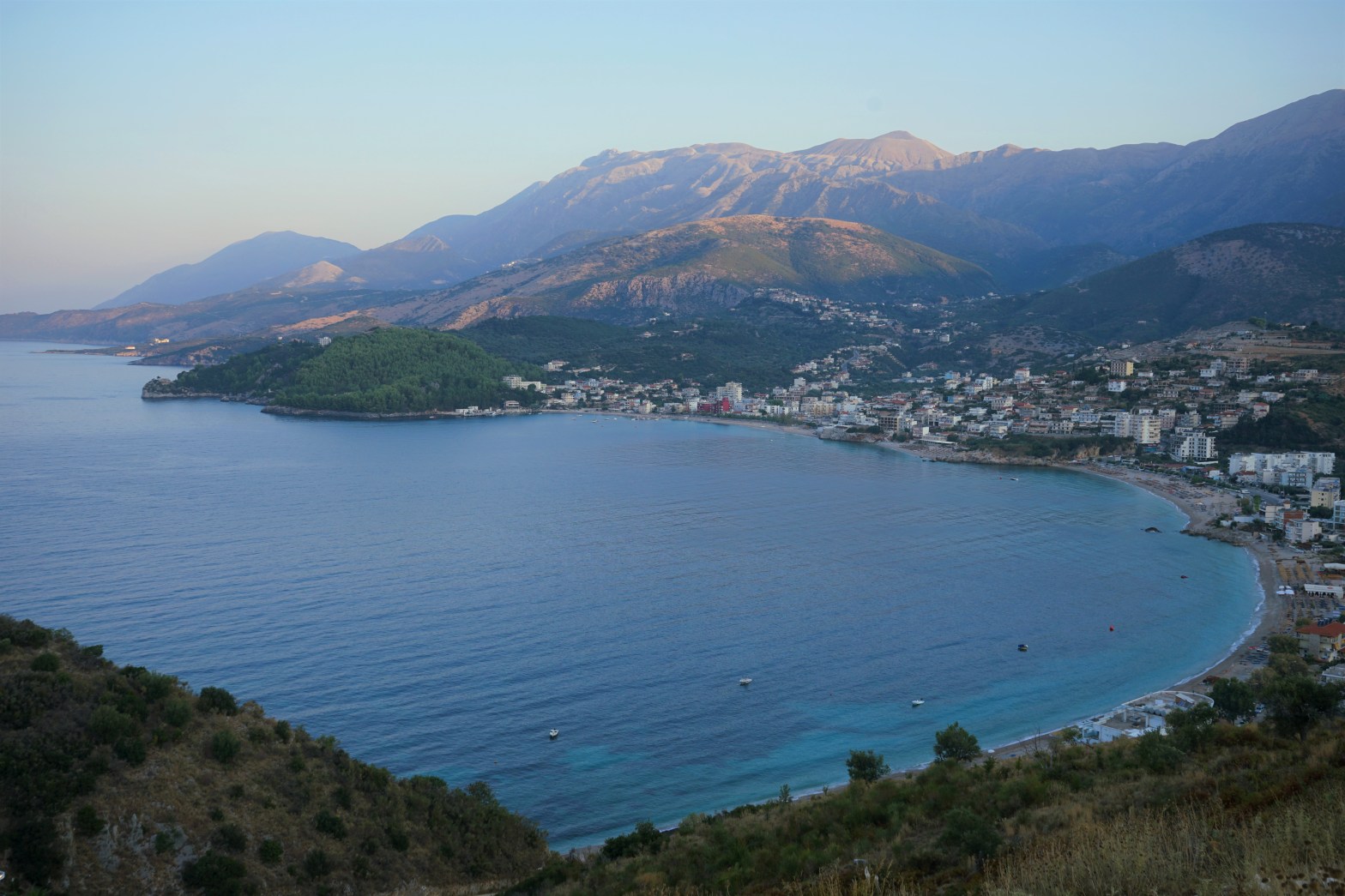
Homer’s epic poem, The Iliad, details the glory and futility of war as the city of Troy is besieged and eventually destroyed. It also describes a strange creature, a fire-breathing lion goddess with a goat’s head protruding from her back and a serpent’s head for a tail: the Chimera. This is the mythical creature for which the Albanian town of Himara is named.
Himara was originally part of the kingdom of Chaonia, its inhabitants an ancient tribe that claimed to be the descendants of the Trojans. The area was settled shortly after the destruction of Troy and has been inhabited continuously for the last 3000 years.
The modern town has been built on ancient ruins which were built on ancient ruins. Orthodox churches are built over temples to Apollo built over ancient megaliths. Mysteries hide in the hills, around the corners and beneath the surface of this town.
In between swimming in the sea and drinking beer, I have found a bit of time to explore and in doing so I’ve found a few intriguing mysteries that captured my interest.
- Coconuts in Rocks
The town is nestled between the mountains and a bay on the Ionian sea, where it stretches between a rocky outcrop of cliffs on one side of the bay to a steep pine covered hill on the other. This area has a Mediterranean climate, so it is warm and dry in the summer and cool and wet in the winter. It’s not quite tropical enough for coconuts, so I was surprised one day while swimming out to the rocks jutting from the water at the end of the outcrop to find what appeared to be a coconut embedded in the stone.
The size and shape appeared to be that of a coconut, but by touch it was solid as rock. On close inspection, though, I could see what appeared to be fibers texturing the surface, albeit petrified into the surface. Could this be a petrified coconut?
I swam from rock to rock and found numerous coconuts embedded in a number of rocks, but only within an area of fifty square meters or so. Where did all these coconuts come from? And how did they get embedded into the rocks?
After giving it some thought, I realized that it must be impossible for these to be coconuts. Rather, it seems more likely that they are the result of some geological or marine phenomena. What could it be? I have no idea.

2. Volcanic Whirlpool
Himara is located in a subduction zone in which the African tectonic plate is crashing into and folding under the Eurasian plate. This results in quite a bit of seismic activity and chemical reactions as the earth’s crust from one plate slides into the hot mantle deep underneath us.
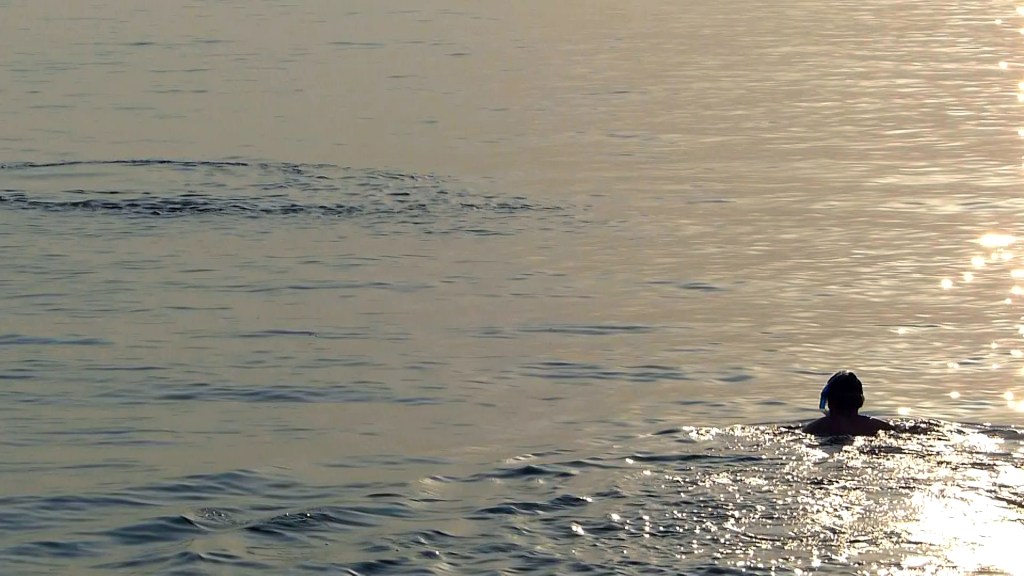
This came to mind when I first noticed a strange bubbling eddy of water out at sea on a stormy day a few weeks ago. I took off my shirt, put my dive mask on and swam out it, determined to figure out what was going on. On the surface, nothing seemed out of the ordinary beyond the smooth circle around three meters in diameter created by the flow. I dived down into it, but soon I couldn’t see anything as my vision dissolved into a blur. Along with bubbles rising from the sea bed, this strange circle emitted an oily substance that clouded my vision underwater, but rapidly cleared when I swam out of the circle.
I returned the next day with our rubber raft and the kids, ready to bring them out to see it. They took one look from shore and refused to get in the raft. “It looks like a whirlpool. What if it sucks us in?”
My imagination was equally vivid, as I imagined a volcano deep below the surface releasing a stream of gases. I paddled out to it in the raft, but once again I couldn’t see anything below the surface. The water wasn’t warm, though, and it didn’t suck me in so it’s likely neither volcanic nor a whirlpool.
My best guess would be that an underground stream flowing down from the mountains emerges just here with a release of air and calcium from underground limestone caverns. As it seemed to be more powerful and prominent following heavy rains, I figure there might be a connection there. The thought of a volcanic whirlpool seems more exciting though, so I’ll leave it as just another mystery of Himara.
3. The Walkway to Nowhere
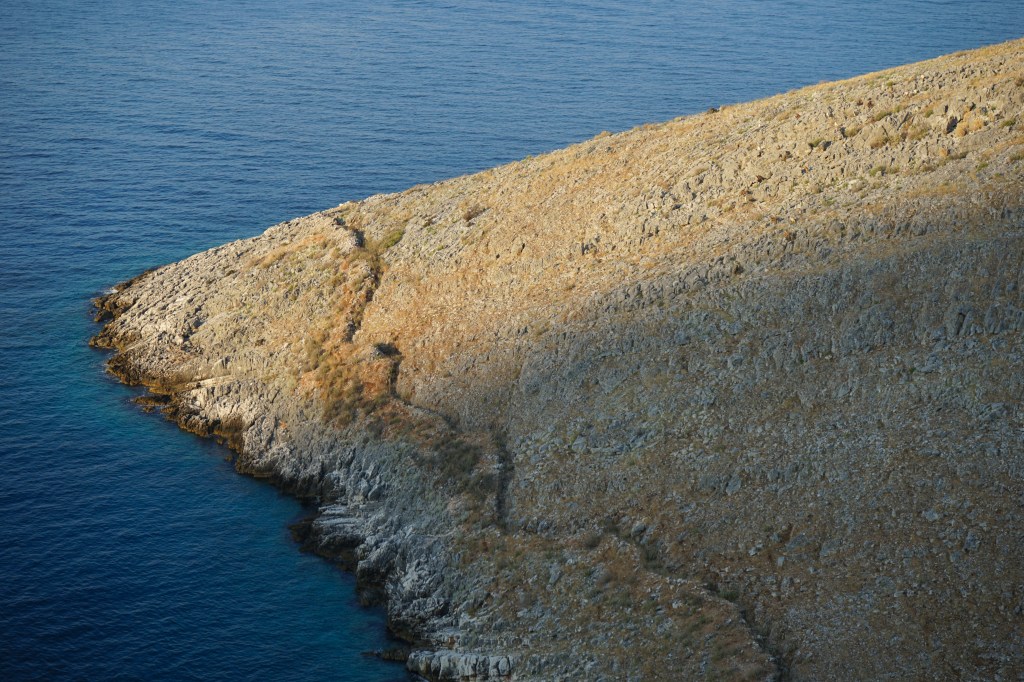
Hiking the isolated stretches of the Ionian coastline, all signs of modern civilization seem to disappear, leaving just the rocky shoreline, some wandering goats and an endless stretch of blue water and sky.
On such a hike, I discovered a deep gash along the hillside that served as a good walking path through the difficult terrain. I first imagined this to be an ancient roadway. It was just wide enough for a horse or donkey to pass through. But is was not a very direct roadway as it zigzagged along the barren coastal hills, far from where there would be any human habitation past or present. So what is this strange path to nowhere?
It wasn’t just a path as it was at least 3 feet deep, and it must have taken tremendous effort to construct as much of it was carved out of the stone hillside. I followed it for a while, but parts of it were so overgrown with shrubs that it was easier to continue climbing over the rocks.
From a distance, it appeared as a pathway, winding along the hillside. But from close up it was more of a trench. Ducking inside would hide one completely from the view of anybody in the sea below.
During the world wars, numerous countries invaded Albania. The locals in Himara cheered for the Greek army when it marched into town and it had long been a Greek design to regain its ancient territories of Northern Epirus, the current southern region of Albania.
Ethnically Greek, Himara has existed for many centuries as part of an autonomous zone. Isolated for so long, the language here remains a dialect of Greek reminiscent of ancient and medieval Greek. And despite being part of Albania, the Greek flag still flies high over Himara today.
So I began to view the trench as a remnant of modern wars rather than some ancient roadway. Himara changed hands numerous times during the 20th century and maybe it would make sense to have some kind of defenses here.
Continuing my hike up the hill, I spotted a pill box build into the trench below. During Albania’s communist period, hundreds of thousands of these were built around the country in a spree of paranoid urgency to make the country safe from invasion. Maybe that explains the mystery of the trench. It’s just another one of Albania’s odd lines of defense.
Maybe it makes sense, maybe it doesn’t.
4. Ice Cold Currents
The clear turquoise waters of the bay are generally quite warm, but while swimming I have unexpectedly encountered some shockingly cold currents. Our house is located on the south end of town by Potami Beach, Greek for “river beach.” Hidden among the rocks at the end of the beach, a stream of clear, cold mountain water gushes into the sea. This easily explains the cold currents that will suddenly find you when you least expect it.
The cold waters at a more isolated swimming spot near us remain more of a mystery. By climbing the mountain behind our house and then hiking over the rocky hillside, I arrived at a small pebbly cove between the hills with the clearest water imaginable. On first touch the water felt crisp, but comfortable. I dove in, happily swimming after schools of fish in the clear water. But then, suddenly, it felt as if I were not in the Ionian, but rather an arctic pool. An icy current swept over me and I immediately turned for shore. But a short swim brought me relief, as the water was once again warm.
I examined the area around the cove and there were no streams anywhere to be found. So where did the cold water come from?
Getting back in the water, I swam around until I found the cold current once again. This time I tried to stay in it and follow it to it’s source. This was not easy to do, as it seemed to dissipate away from one central spot. As far as I could tell, the cold water seemed to leak into the sea from the rocky cliff shore. I suppose this is another river beach, but with a hidden, underground river. This may be the perfect spot to cool off on a hot day, but as the weather is starting to cool I think I’ll wait until next summer.

5. Cyclops Cave
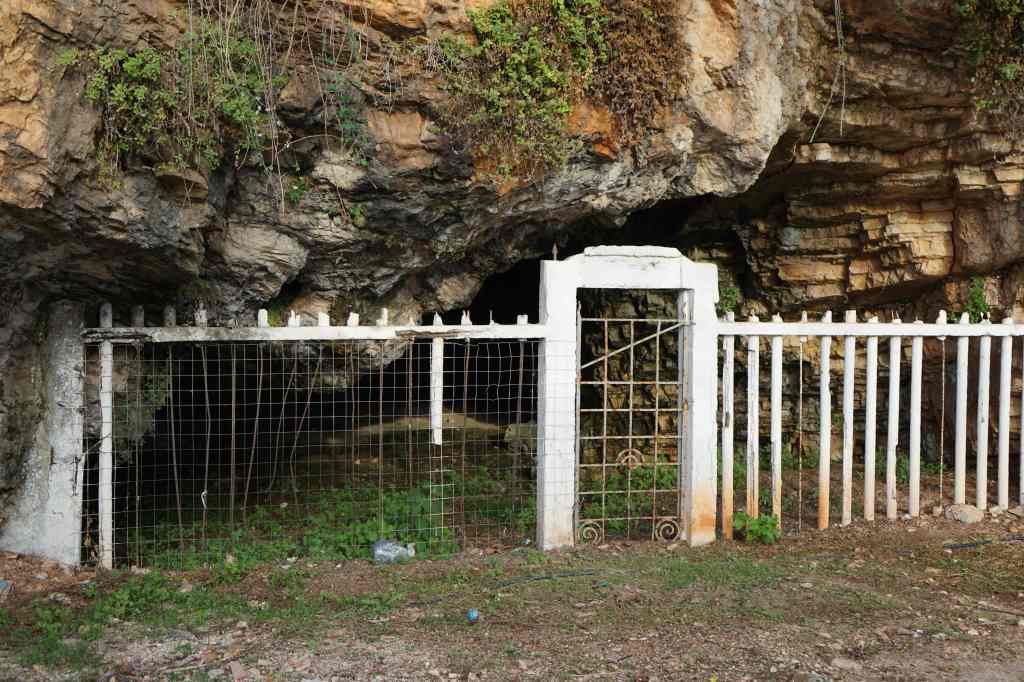
Of all the adventures described by Homer in his epics, the most memorable may be that of the encounter between Odysseus and the Cyclops. And this happened right here in Himara (according to a sign in front of the cave).
After a decade away from home fighting the war in Troy, Odysseus spent another ten years battling the sea, the gods and various monsters in his attempt to return home to Ithaka, an island in the Ionian sea some distance south of here. Blown off course, he and his men went ashore in search of something to eat. They found a cave full of food and happily feasted until the cyclops returned home. The giant creature closed them in the cave, eating a couple of the men each day until Odysseus fooled him and escaped.
There are other caves in the Mediterranean region that also claim to be the cave of The Odyssey, so this may or may not be the one in which Odysseus blinded the cyclops. Archeological evidence, though, shows that this cave was inhabited in prehistoric times, long before the rise of civilizations. Were these ancestors of the Illyrians or the Greeks? Or did the cyclops eat them? It remains a mystery.
 ADVENTURE-SOMEWHERE.COM
Once again, a fascinating post!
LikeLike
Me, too fascinating reading, just makes me want to go there… keep sending please – I amending this to Kelly if you don’t mind- I sent her one and she loved it – asked for more so… love ya n
LikeLike
Thanks
LikeLike