
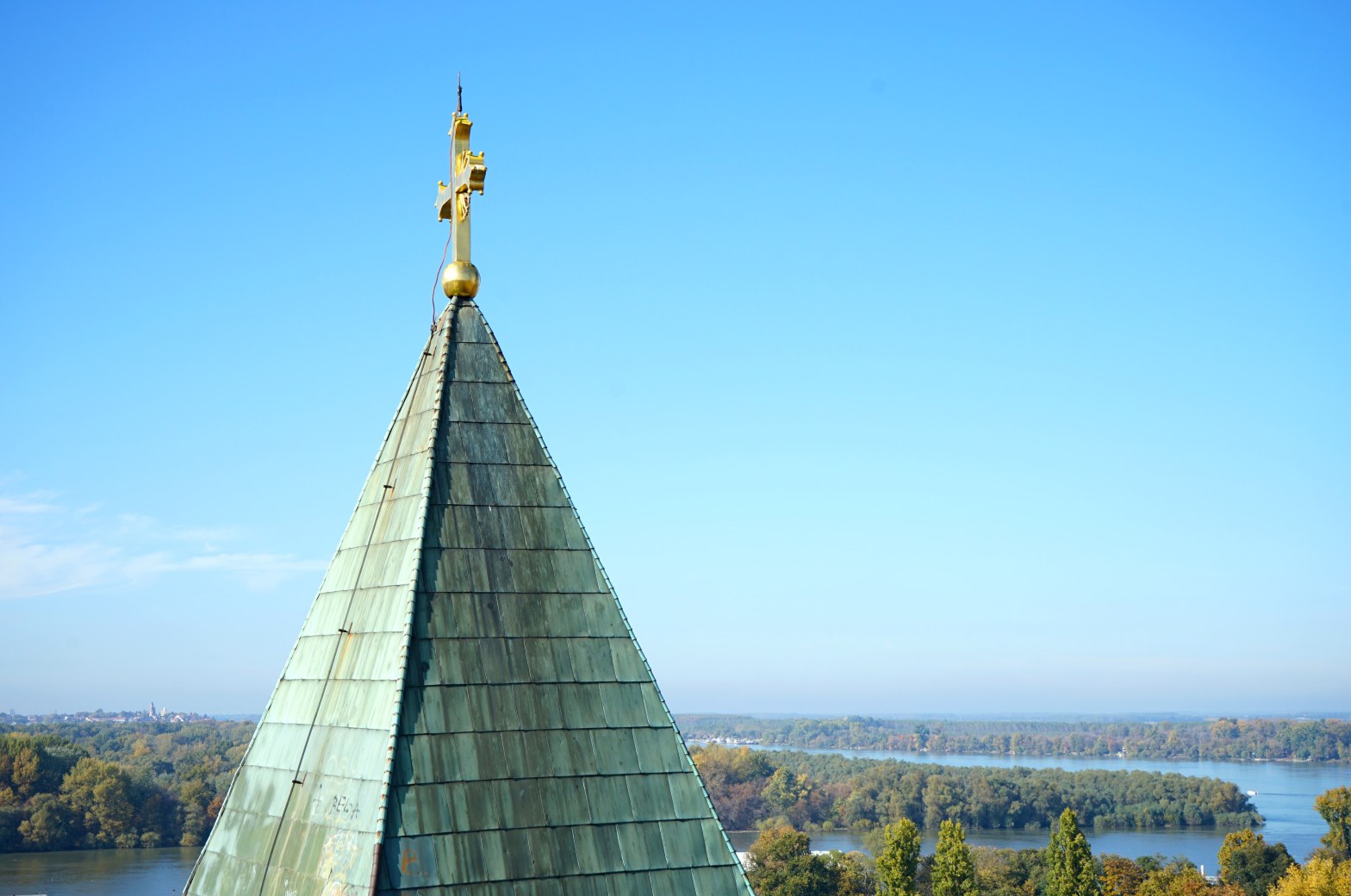
Social distancing along the border market is enforced by two rows of palisades separating buyer from seller. Money is disinfected in vinegar and guards patrol in order to observe that no physical contact take place. This is the scene at the Sava River as described by the famous Danish writer Hans Christian Andersen in his account of his visit here in the mid-19th century.
For many centuries this was the dividing line between Europe and Asia. If entering Europe, one would first need to quarantine for two weeks in a designated barracks. This, of course, hasn’t been the case in the twenty-first century. Until now, kind of.
Last year it would have been difficult to imagine that the European Union would be closed to us in 2020, but that is now the case for Americans. One of our goals for the year was to spend some time in Italy. So far this has not been possible. However, there may be a way in yet. And that way in leads us to the Sava River where it meets the Danube.
Belgrade, its fortress garrisoned for centuries by Turkish troops keeping an eye out over the confluence of the two rivers, stood sentry over the Ottoman frontier towards Zemun (Semlin in German, Zimony in Hungarian), a border town that served as a quarantine zone for anyone entering Europe.
The quarantine zone here was established in the early 1700s to keep the plague out of Europe. Travelers arriving from the Ottoman Empire, where the Turks generally considered outbreaks an act of God that could not be helped, would be required to social distance and quarantine at what is now Zemunski Park.
With a pandemic once again plaguing the world, the European Union will not allow entry from Covid-19 stricken lands, whether those be in the East or the West. An American passport is now a yellow flag, a guarantee to be turned away at the border. There is a back door into Europe, however, and this door goes through Serbia.
Serbia is unique in that it is considered a “green list” country despite not having any border restrictions. Only Slovenia, an E.U. member (and like Serbia, a former republic of Yugoslavia), recognizes Serbia as a green list country. Slovenia also happens to allow travel from a green list country for those with “red list” passports such as my United States passport. But first we must spend at least two weeks in a green zone.
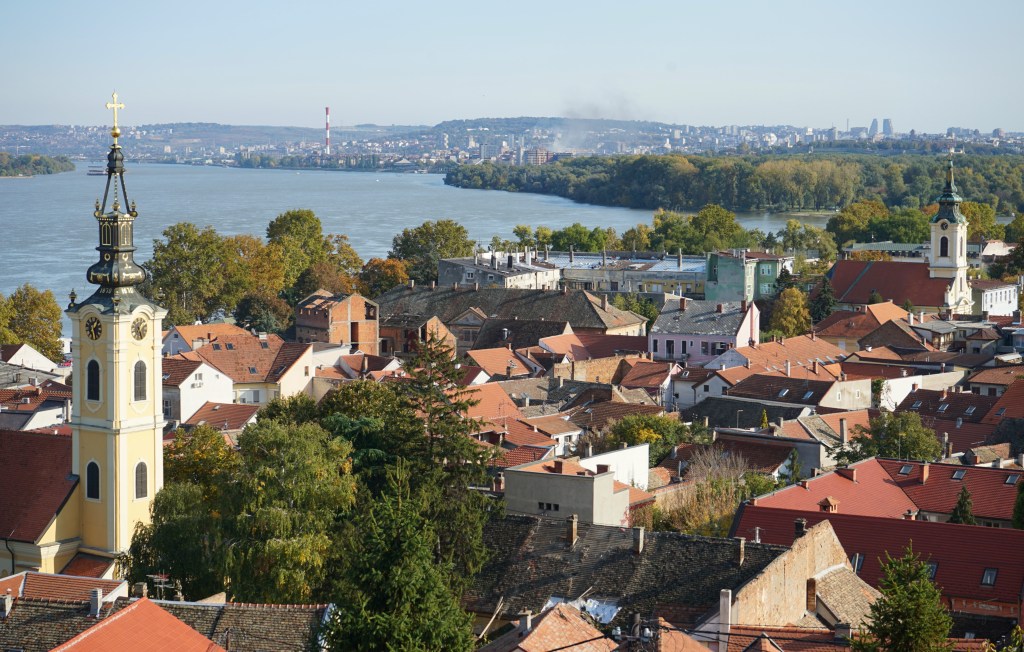
So like countless travelers have done during the past centuries, we find ourselves passing the time in the old quarantine district of Zemun until we can enter Europe. Unlike plague travelers of years past, we are not walled into the park quarantine camp. Instead, we have been exploring the distinctive Austro-Hungarian character of the old quarter of Zemun where one of the many old clock towers is rarely out of sight
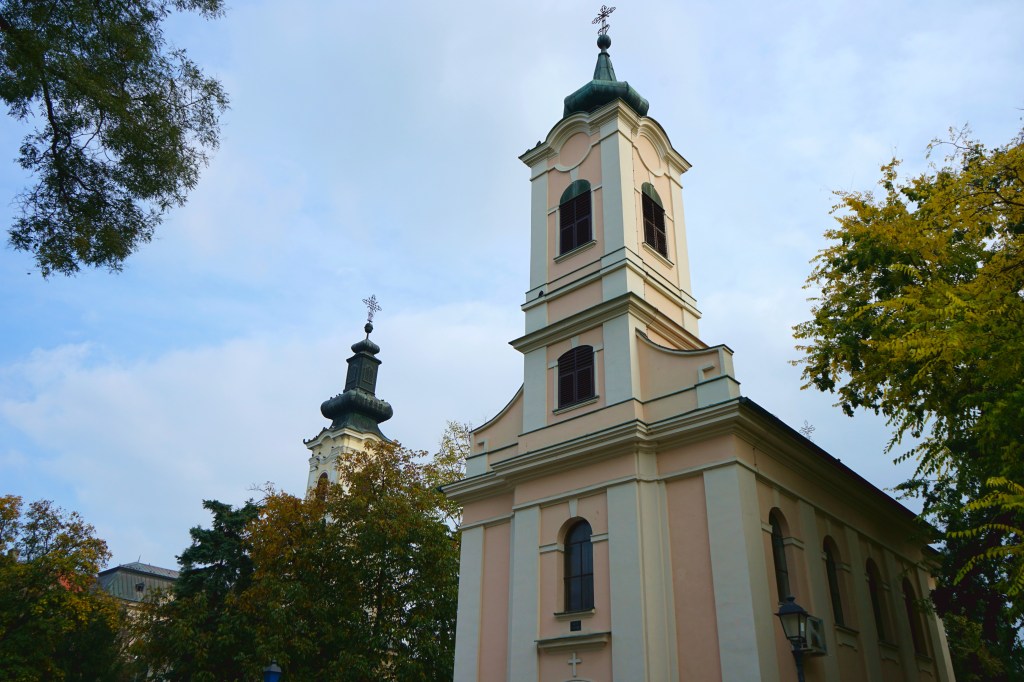
The name Zemun comes from the Slavic word for “earth” or “ground” and was first named in the ninth century. Although both Zemun and Belgrade are now part of Serbia, Zemun’s name was very apt as it was the ground between empires and cultures for many centuries. Facing each other in Zemunski Park, the former quarantine zone, a Catholic and an Orthodox Church serve as a reminder that this is still a ground that lies between ideas.
Because of its strategic location on the confluence of the rivers on the borderlands of empires, Zemun has been a battleground and this may be how it got its name. Through the years it has been conquered by Bulgaria, Hungary, the Mongols, the Byzantines and the Ottomans numerous times. It was also pillaged and razed by crusaders of the First Crusade.
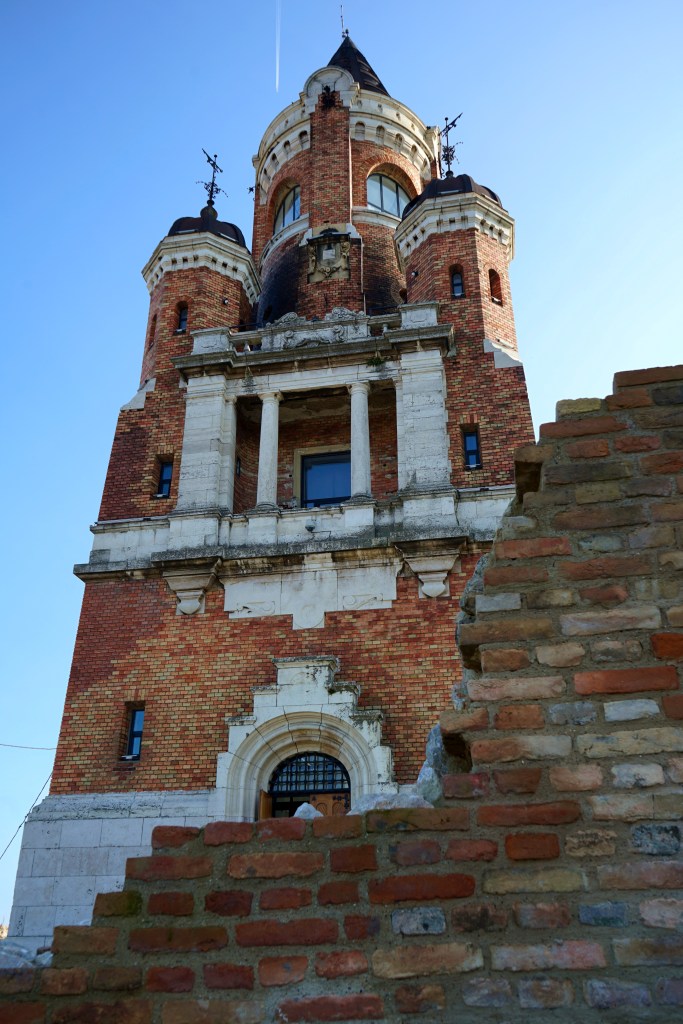
Hungarians built the Millennium Tower here in 1896 as part of a building project to commemorate one thousand years of Hungarian presence in the region and to demonstrate the southern most point of their empire. Built over the ruins of the fortress of Janos Hunyadi, a Hungarian general who died there fighting the Ottomans, the tower is one of many pieces of distinctive Hungarian architecture that characterizes the city.
Zemun has the feel of a city built in the forest with its bird filled trees and extensive park lands and tree-lined walkways. Coming from a Mediterranean climate just as the time changed an hour back, the season feels as if it has turned to autumn overnight. A cool breeze whips over the river, sending a stream of leaves down from the trees in gold and orange. We have finally unpacked our sweaters from the bottom of our suitcase.
If there is one time of year that the kids feel sad to be away from the United States, it is during their favorite holiday, Halloween. In years past, we have wandered Cambodia in scary face paint and costumes to the puzzlement of the locals. There are no jack-o-lanterns or trick-or-treaters in Zemun, but with the leaves blowing, crows circling and cawing, and a full moon reflecting off the dark cobblestone streets whenever it peeks through the dark clouds, we still feel the spirit of this time of year.
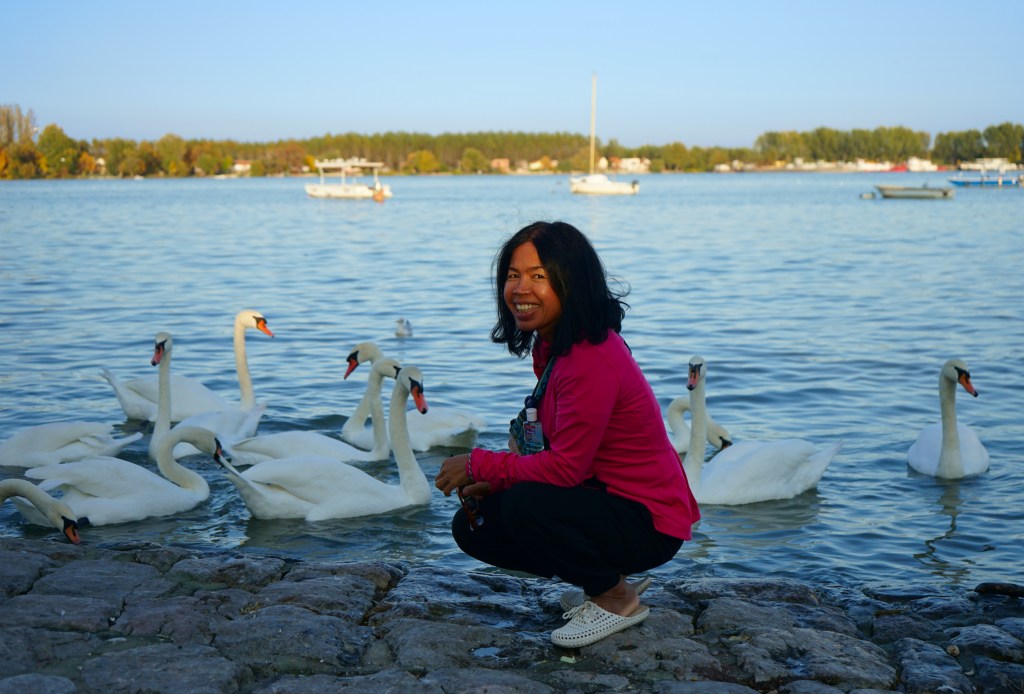
And this year our teeth our safe from candies. The swans got the treats instead of us as we spent the evening on the river tossing them some crumbs and watching the crows circle overhead.


When visiting the area the difference between Beograd and Zemun really is striking 🙂
LikeLiked by 1 person
Slovenia has now moved Serbia to the red list 😦
LikeLike