
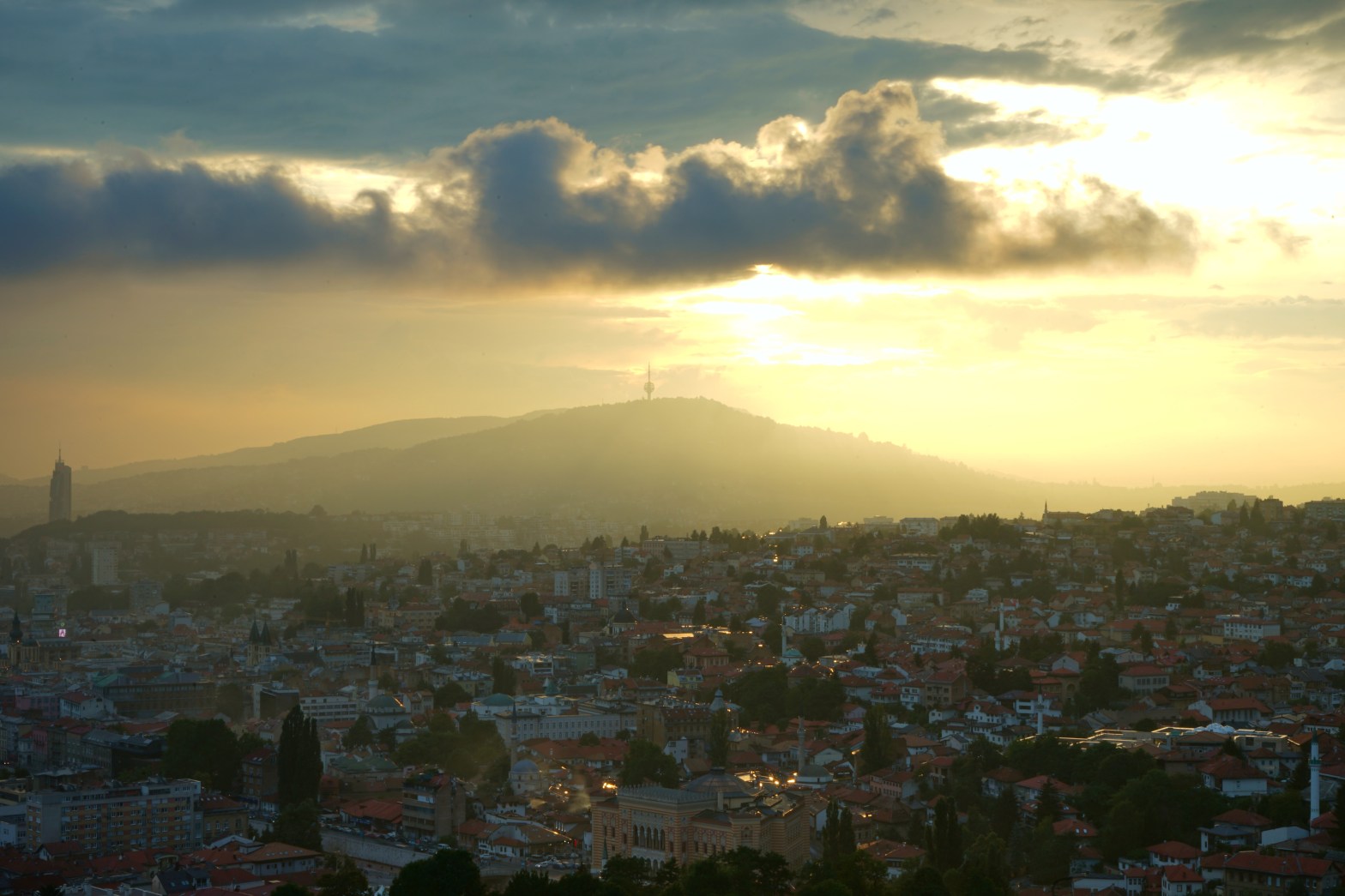
A maze of small walking streets consist of shop after shop selling teapots, shawls, lamps and Turkish delight. A sixteenth century covered bazaar is now a shopping mall and a hotel is built over the ruins of the old caravansarai. The Ottomans founded this city in the middle of Europe and it became an important part of their empire, but Sarajevo has many more layers on top of its Turkish foundation.
In the evenings and until late these narrow lanes fill with people of all sorts walking, chatting and searching for a nice cafe in which to hang out. Finding a beer here is not as easy as other towns in Europe as one cafe after another serves only tea and shisha pipes. But it’s not that hard and after a few desperate minutes of walking up and down alley ways we found the perfect bar in the shadow of the city’s largest mosque.
Historically, Sarajevo was predominantly a Serbian Orthodox city despite being founded by Muslim rulers. The Ottomans were generally tolerant of all sorts of religions, although they encouraged conversions. By the time of the decline of the Ottoman Empire in the late nineteenth century, the populations both of Sarajevo and Bosnia as a whole were about one-third Muslim.
This was a time of numerous uprisings in Sarajevo as Serbia, recently free of Ottoman rule declared war on the Empire and encouraged Bosnia and its fellow Orthodox to fight for independence as well. This wasn’t to happen as the Austro-Hungarian Empire annexed Bosnia in 1908.
A grand hilltop military building from this era overlooks the old town, its roof collapsing in from war damage. I chose this as our first destination and marched up the hill with everyone in tow only to find we couldn’t access the building at all due to its state of ruin. But from here we could see another building higher up, this one an older Ottoman-era fortress. After some more hiking we found this one locked up as well.
By this point the family was starting to grumble so I quickly discovered the real reason for climbing the hill: a nearby restaurant that served cold drinks as well as schnitzel and cevapi, fried breads and polenta and cream.

The twentieth century was a difficult one for the population of Sarajevo. Orthodox populations continued to rebel against Catholic Austro-Hungarian rule and the new regime enacted a brutal policy of hunting down dissenters. Thousands of Orthodox Serbs were arrested or executed and tens of thousands were expelled from the country.
Despite this, the Archduke Franz Ferdinand of Austria was surprised by an assassination attempt made during his visit to Sarajevo in 1914. A bomb attack just missed his car. As heir to the throne, his assassination could have changed history.
Having just survived the attack, he requested additional security and a safer return route. Neither of these happened and later the same day, a nineteen year old South Slav nationalist named Gavrilo Princip assassinated the archduke at close range near the same location of the first attack.
This assassination set into motion the events that led the world to the biggest war it had ever seen. Five years and 40 million casualties later, the dream of a unified Yugoslavia was realized and Austria-Hungary ceased to exist.
While Gavrilo Princip is one of the most infamous assassins of all time, the Orthodox Serbs of Bosnia consider him a hero and his statue stands tall in a park with his name in an Orthodox neighborhood of east Sarajevo.

The idea of a South Slav union had been around for centuries as the peoples of the region were ruled and divided under the dominion of the Ottomans and Austria-Hungary. An opportunity emerged to realize this dream when borders were redrawn and nations rearranged after the first world war.
The Nazi invasion of World War II though, tore the region apart as the Croatian state supported the Germans while the Serbian state fought against them. Hitler reviled the Serbs almost as much as the Jews, referring to the issue of eliminating the Orthodox presence in Western Europe as “the Orthodox question.” The Catholic church in Croatia quickly threw their support behind the Germans, declaring that all that is “right and true in Christianity” stands on the side of Hitler as they encouraged an anti-Serb pogrom in an attempt to answer the Orthodox question with a plan of thirds: one-third expelled, one-third converted and one-third executed.
Religious fanatics likened themselves to crusaders as they went from village to village killing Orthodox Serbs. Even priests encouraged the killings, telling their parishioners to return for confession as soon as they finished so they could be forgiven. Mussolini was so horrified by the religious cleansing in Croatia that he sent in the army to subdue it.
The Socialist Federal Republic of Yugoslavia emerged from the shadows of religious massacres and communal violence to become what was once considered to be the most successful communist state. Yugoslavia was unaligned and had a strong economy before its disintegration between 1991 and 2008.
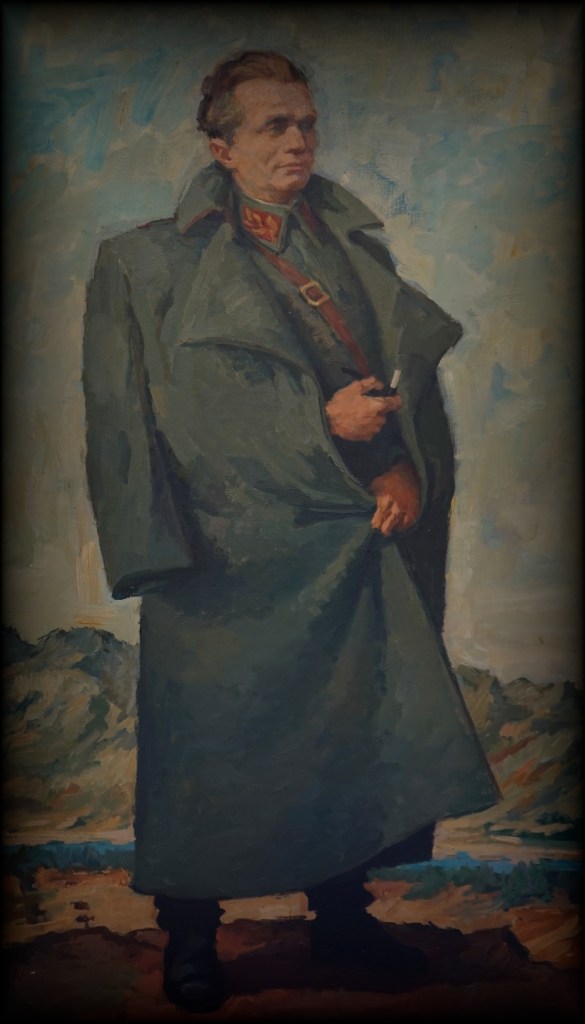
“After Tito: Tito!”
This is the slogan that was adopted after the death Josep Broz Tito in 1980 with the idea that Titoism, or Tito’s unique socialist economy could continue without him. But this was not to be. Yugoslavia fell and it fell hard.
Using the socialist state’s control over the media to create a campaign of misinformation and nationalism, Slobodan Milosevic rose to power by means of manipulating the persecution complex of the Serbs. While many Serbs were horrified by his violent nationalism, others felt that it was Serbia’s time to stand strong after years and even centuries of persecution.
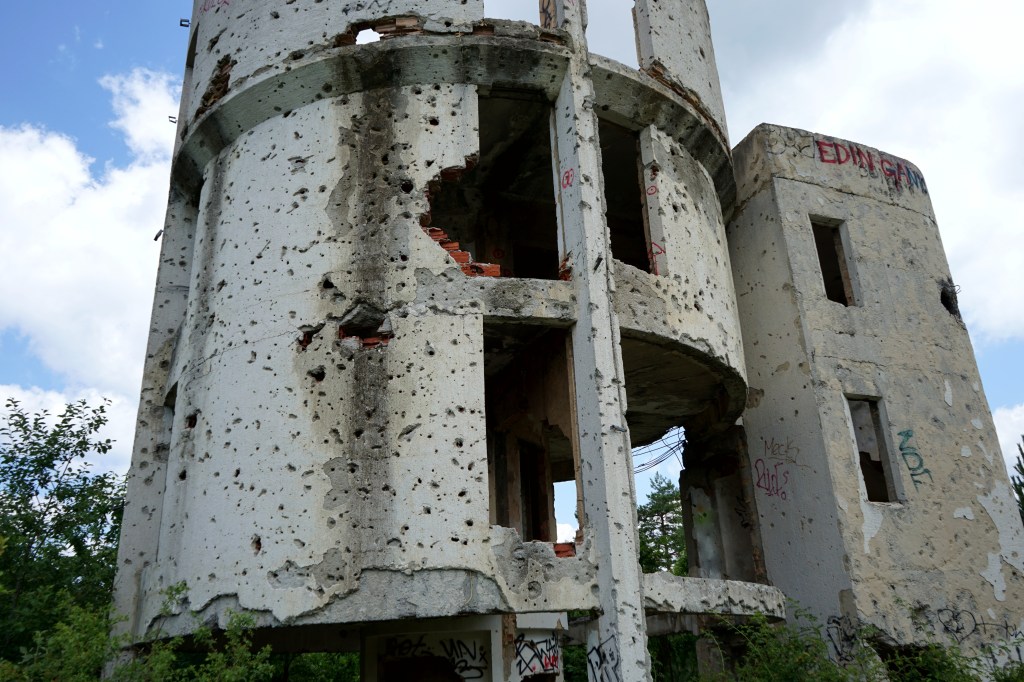
Under the pretense of protecting Orthodox Serbs in Croatia, Bosnia and Kosovo, the Serb nationalists funded a violent religious pogrom against Muslims and Catholics. In Croatia, Catholics killed Orthodox. In Bosnia and Kosovo, Muslims killed Christians. The Serbs used these attacks as an excuse for ethnic and religious cleansing of the Serb dominated areas all over. Yugoslavia became a region of violent religious warfare where entire villages were slaughtered based on their religion.
Sarajevo suffered the longest siege in the history of modern warfare as the Bosnian Serb army encircled the city between 1992 and 1996. Besieged, the people of Sarajevo suffered through food and water shortages, power failure and brutal winter weather. Mortars rained down on the city daily for years and snipers preyed on unsuspecting civilians in the streets. The city was decimated during this period and the scars will remain for some time.
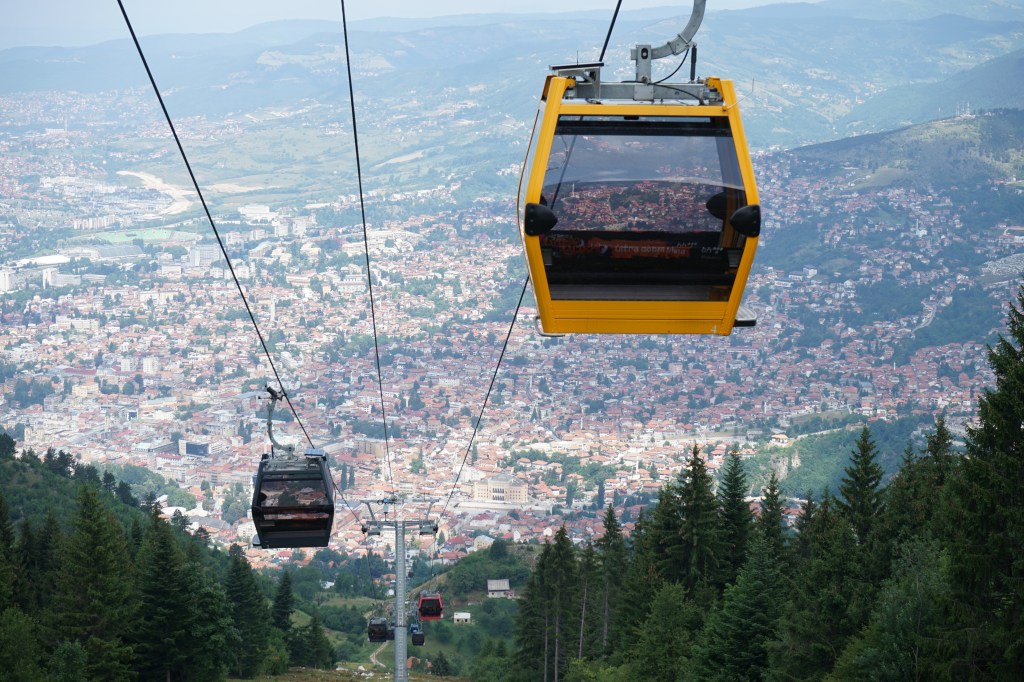
Nestled in a valley, Sarajevo was layered in a cool fog and rain for many days of our stay there. Our last day in the city was sunny though, so we rode the cable car to the heavily forested mountain above. Destroyed during the war, it was only rebuilt in 2018.
There is a magnificent view of the entire city from the mountain top. This is the position that Serb forces held for years during the siege. The 1984 Winter Olympic Games were also held here and what remains of the games are little more than bombed out bullet-scarred buildings. We hiked along abandoned bobsled tracks for miles through the forests before exhausting ourselves.

Much of the Orthodox population of Sarajevo moved or were relocated during and after the war into the Serbian Republic of Bosnia and Herzegovina so that Sarajevo today is more Muslim than it has ever been. This is a safe and friendly city, but some animosity still remains. The people of Sarajevo are not forgetting the atrocities they suffered.
But if there is any symbol of moving forward, it is the re-connection of the city by the cable car line to the mountain above. “Sniper Alley” below is now just a highway, and the mountain above Sarajevo is now just a scenic hiking spot where families like ours force their kids to hike through nature on their summer vacations.


Some people say this is your best blog yet
Sent from my iPhone
LikeLike