
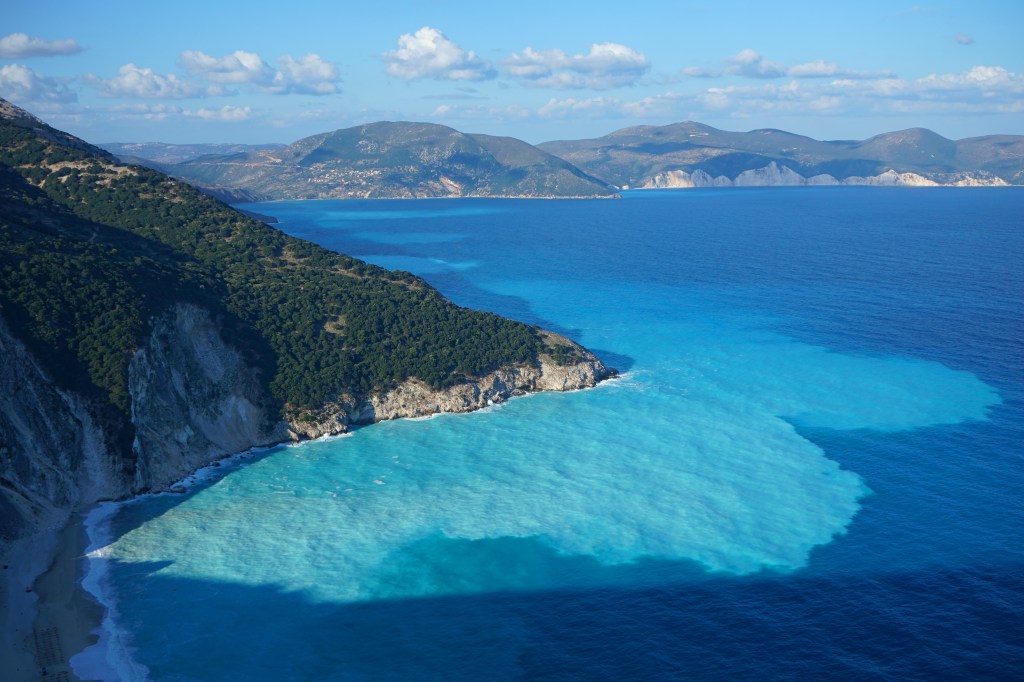
The sea disappears below Cephalonia, flowing into the crevices of its shore and passing through a network of underground caves that lead some fifteen kilometers across the island to the underground lake of Melissani where the salt water mixes with the fresh water of the lake before draining once again into the sea on the other side of the island.
Melissani Lake is a place of wonder and imagination. At one time, it was a hidden place of worship dedicated to Pan, the god of nature, and the water nymphs. The lake was concealed in an underground cavern until a series of massive earthquake in 1953 collapsed the roof of the cavern, revealing the cool blue water to the outside world.
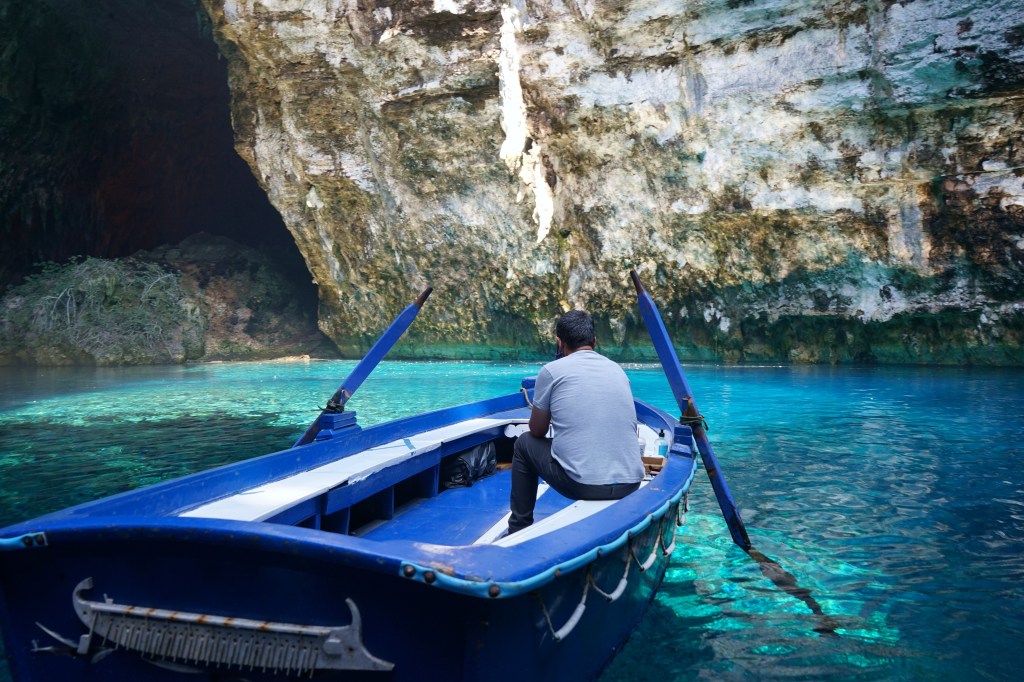
It might have been possible to dive the hundred or so feet from the opening to the water below, but NG and I entered instead by foot through a man made tunnel on a day in which only the two of us were out exploring.
We boarded a boat and paddled across the misty water. Rays of afternoon sun pierced the water’s surface from the opening high above, spotlighting an eel passing by below us. We could feel the cool evaporation rising all around our boat and hear the echo of every drop splashing off the oars.
In a world of movies and video games, there is little left in the natural world that can compete for the interest of children but I could see from the look on NG’s face that this was such a place. It was a magical cave in the age of the Greeks and it still is.
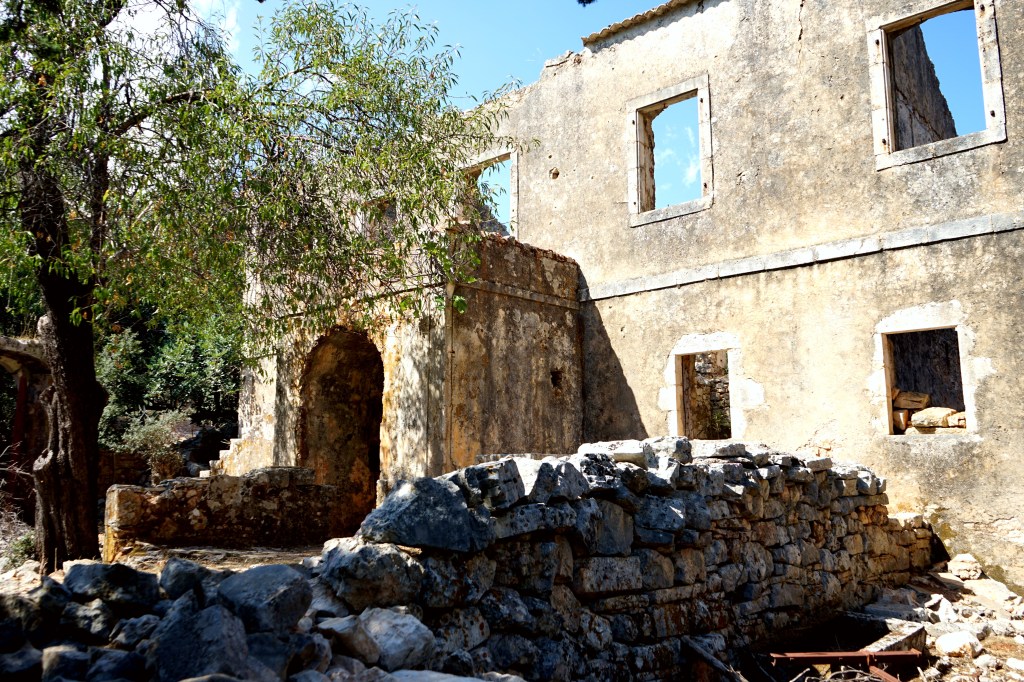
The 1953 earthquakes may have opened the cave, but it did the opposite to the village above the cave. The destruction was so great that the village was abandoned completely. The ruins still stand, weathered buildings of stone and brick, without roof or door, and occupied by foraging goats rather than people.
The island was hit so hard by the 1953 quakes that almost every building on the island was completely destroyed and many people left the island. The population today remains lower than what it was before the destruction.
Earthquakes, however, were only one of the torments that the gods rained down onto this alluring island. Due to it’s location off the coast of mainland Greece and the Peloponnese, it was considered an island of strategic importance from ancient times until World War 2.
The Romans captured Cephalonia 2200 years ago and used it as a naval base from which they conquered Greece. Since then the island has been conquered by the Franks, the Normans, crusaders, Napolean, the Venetians, the Ottomans, the British, Mussolini, and Hitler among others.
For some time the island was the capital of a country called the United States of the Ionian Islands. But it was never too long until another invading force arrived.
During World War 2, the island suffered one of the worst prisoner of war massacres of the entire war. As an ally to the Germans, Italy occupied the island until 1943 when they surrendered to the Allies. The Germans moved in on Cephalonia as it appeared that Italy would be switching sides in the war. Faced with unclear orders, the Italian General on the island polled his 12,000 soldiers on what they should do: join the Germans, surrender to them, or resist them. The troops overwhelmingly chose to resist.
They were no match for the Germans, however, and after several days of combat the remaining Italians on Cephalonia were captured as the Germans took the island. Most of the survivors were brutally executed for treason.
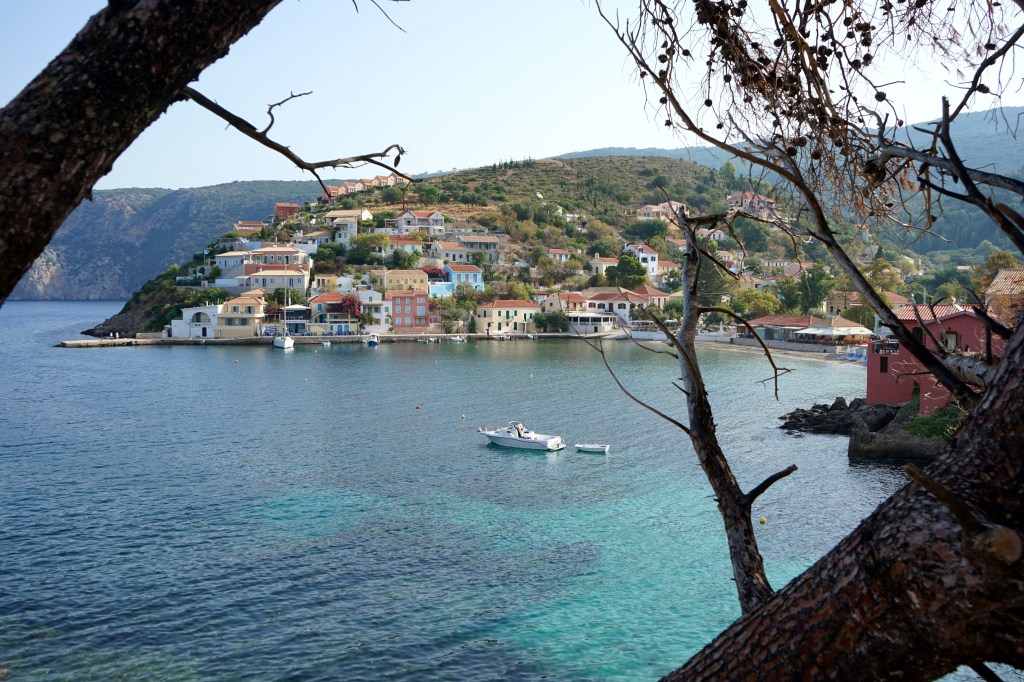
The island is still littered with remnants of the war including German bunkers, tunnels and fortified gun batteries. Under the sea still lie the sunken ships and downed planes of the war.
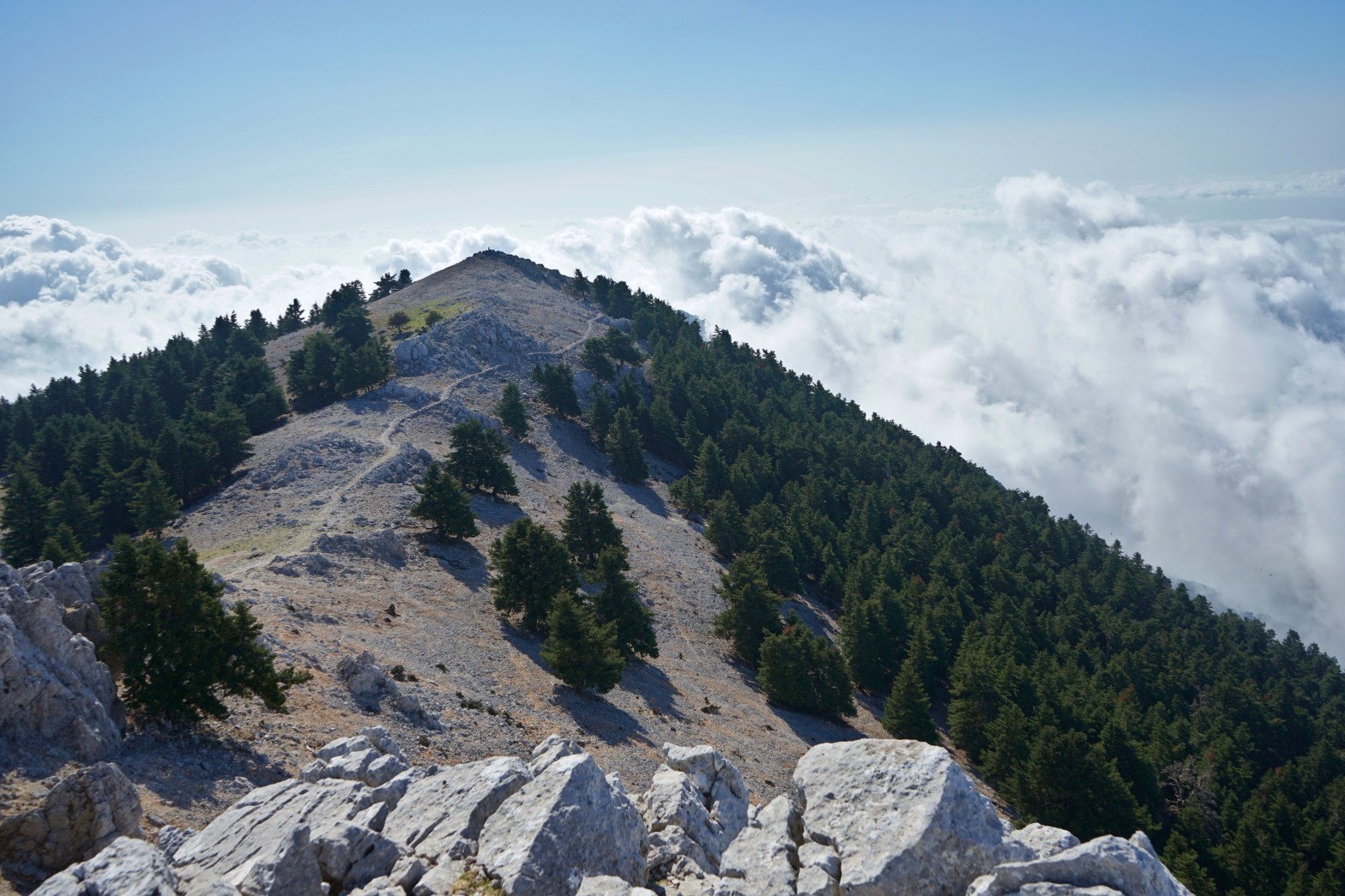
High above the island, and above the wars, the earthquakes, the caverns and in a world of its own, is the mountain of Cephalonia. Rising more than 1600 meters from the sea below, the peak of Mount Ainos rests above the shoulders of Atlas, hidden above the fir forests and clouds that crowd the steep slopes of the mountain.
Thousands of years ago this was a holy site dedicated to Zeus, the king of the gods, and animals were burned in his honor at a sacrificial altar at the summit. It would have been a serious trek to reach the summit. For us, it was a simply an hour driving along small winding roads through forests and fog and then a half hour hike to the top.
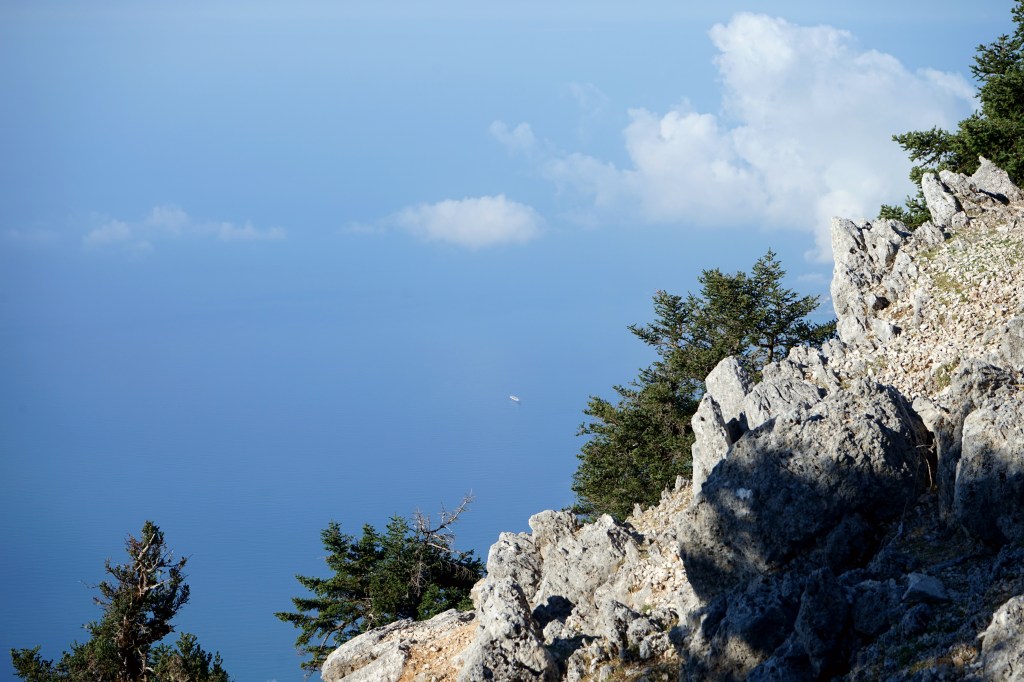
From the peak of Mount Ainos the sky seems to merge with the sea below to create an endless blue only broken by the moving clouds below, which, when they reach the mountain, roll up the side and around us in a brief fog. Eagles and crows ride the winds here and an army of swallows swoop and dive above a timid flock of grazing sheep.
Much like the subterranean wonders of the cave of Pan and the nymphs at Melissani Lake, the altar of Zeus is another awe inspiring window into the hidden worlds of the gods below and above.
 ADVENTURE-SOMEWHERE.COM
fantastic writing – interesting story and wish I was there
>
LikeLiked by 1 person