

Phnom Penh, Cambodia 2023 vs. 2000
I first arrived in Phnom Penh in February of 2000 in the back of a pick-up truck and covered head to toe in red dust from a 12-hour ride along the rough dirt track that served as Cambodia’s national highway. The city then had the feel of a wild backwater, isolated and unique, rough but fascinating. It was a place like no other and I was overwhelmed by a sense of being in the right place at the right time.
Cambodia felt like a place that was going nowhere fast. Phnom Penh was a stagnating town where little had changed since the Khmer Rouge depopulated it in the 1970s. This was a city of old, decaying French colonial buildings that hadn’t seen paint since the 1950s. Many buildings sat in ruins, roofs caved in or tarps and haphazardly nailed-together tin serving as makeshift roofing. But this changed rather quickly with an influx of foreign investment and development. Over the past couple of decades Phnom Penh has become such a completely different place that it is almost unrecognizable from what it once was.
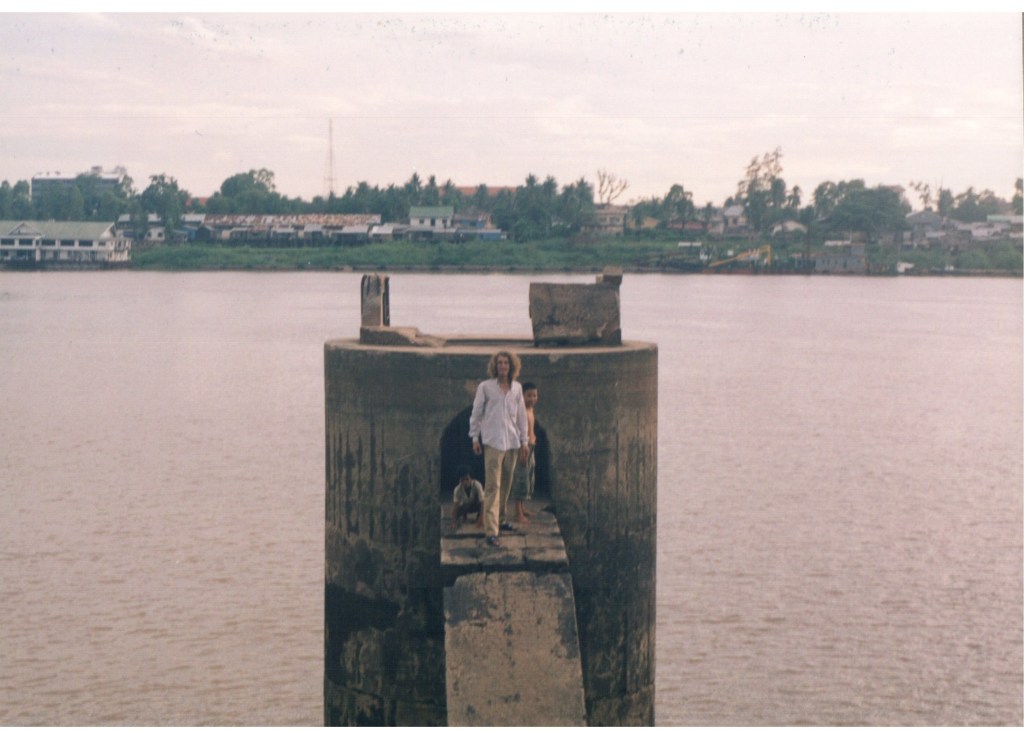
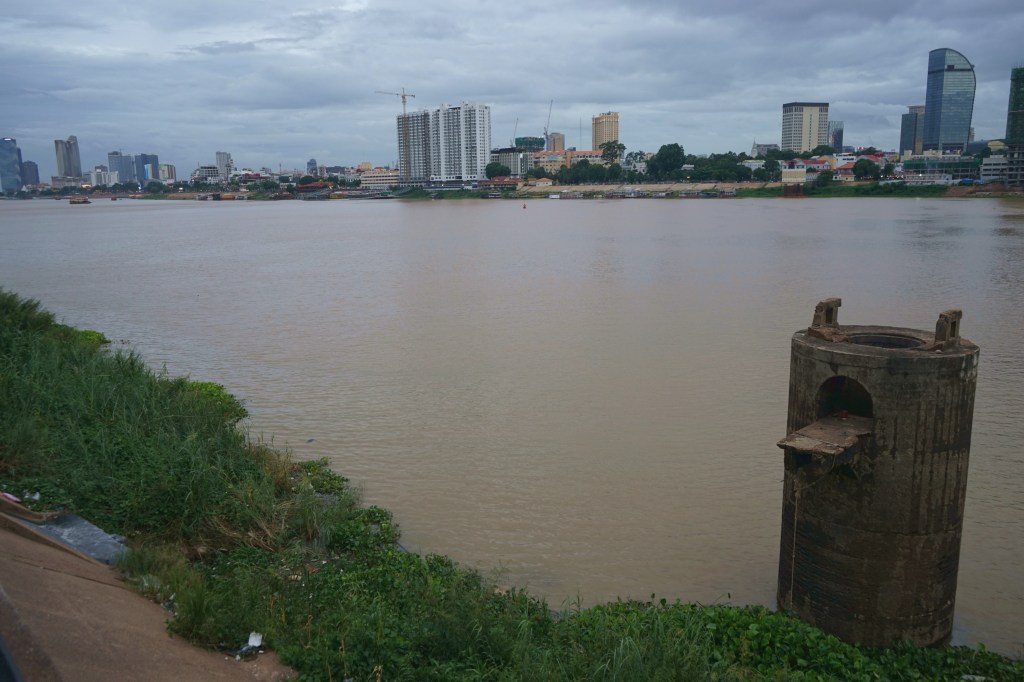
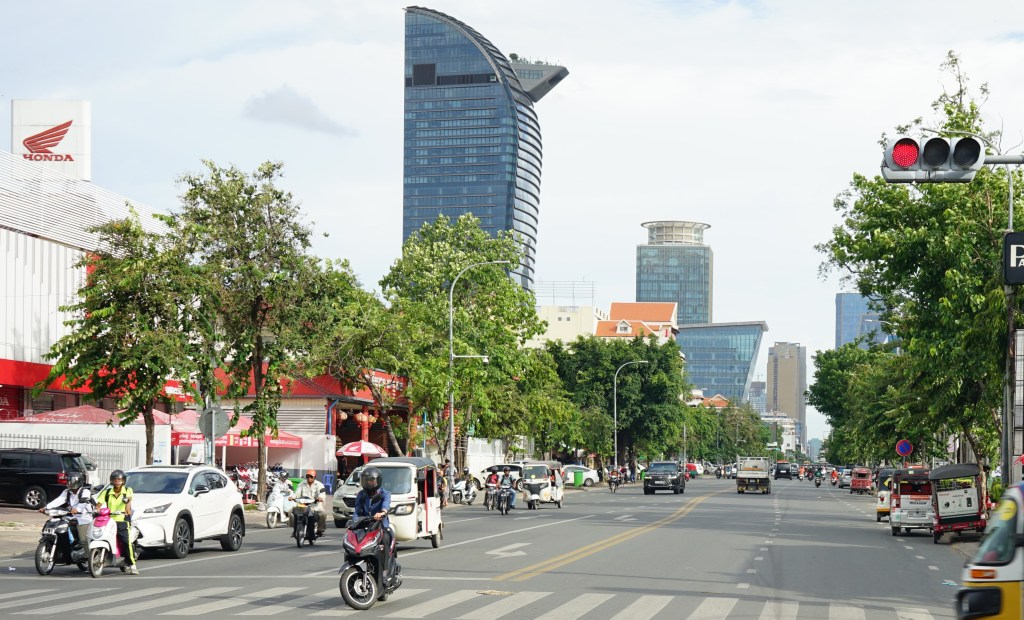
Each time I return to Phnom Penh, even if I haven’t been away for long, I feel like I’m returning to that old backwater where I once lived many years ago. But then the jagged skyline of the city shocks me again. This is no longer a city of crumbling colonial buildings, dusty dirt roads and rusty tin roofs, but it’s a metropolitan area of neon lights, cars, luxury and skyrises.
My way of travel involves walking everywhere and in 2000 in Phnom Penh I explored just about every corner of the city this way. And some of these areas I haven’t really returned to since. On this trip, I thought it would be interesting to return to some of the areas I remember exploring many years ago. It’s kind of interesting to see what has changed and what has not, although for the most part everything has changed except for a few little pockets of the city that retain some of the past.
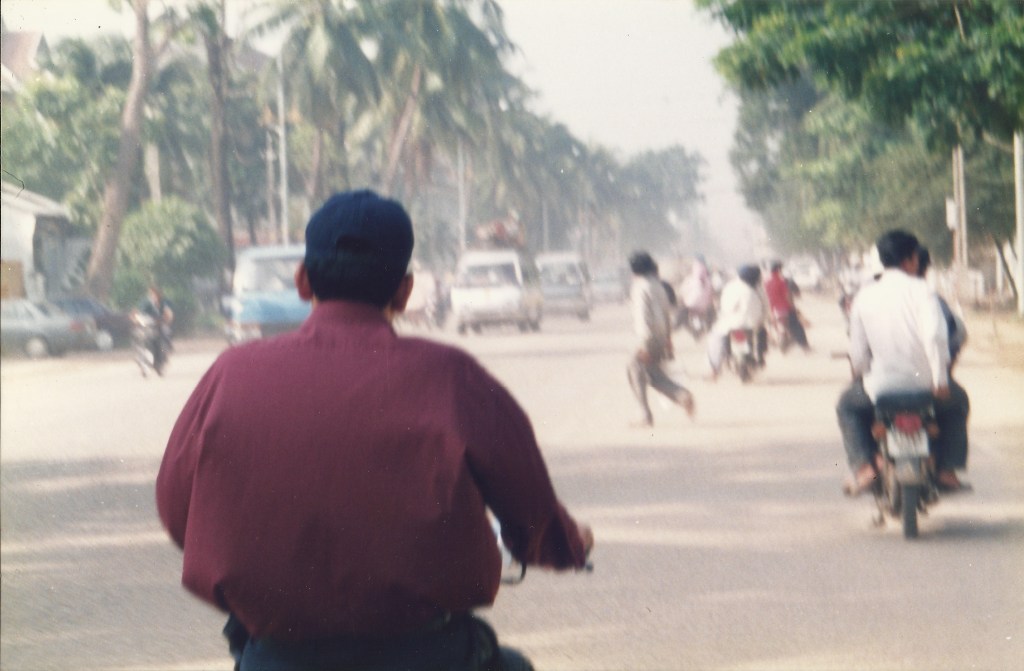
Phnom Penh was a dangerous city as it emerged from decades of civil war. There were many weapons around and not many rules. Between 2000 and 2001 I witnessed numerous shootings, some accidental, some robberies, some drunken fights. The sound of late night gunfire was common. And occasionally grenade and bomb explosions. But then the atmosphere suddenly changed, seemingly overnight.
Police checkpoints popped up at intersections all over the city where police stopped cars and motorbikes and confiscated their weapons. I think of this as a turning point because Phnom Penh was never the same wild place after that. After that I never saw a drunken shooting again. I never saw an armed robbery again. I never saw an accidental AK-47 discharge again. Anarchic Phnom Penh gave way to a city of law and order. Traffic is still crazy though.
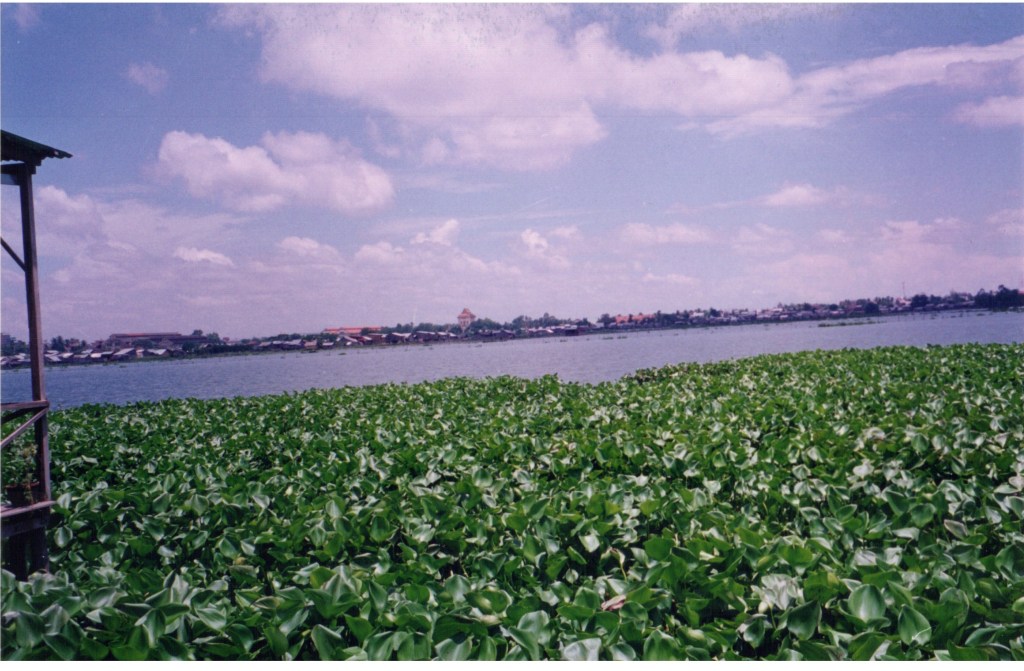
I might never have stayed long in Cambodia if I had not discovered the lake. Many of the foreign expats of Phnom Penh were as wild as the city itself. It was like Lord of the Flies for drugged out perverts. I first stayed in a dilapidated guesthouse in the middle of town, a haven of sorts for the worst kind of foreigners in Cambodia. They came to the country because they could get away with almost anything, and these limits were often pushed. But then, on my first day of exploring the city, I discovered the lake, a peaceful spot with a couple of guesthouses built on stilts over the water that attracted adventurous travelers and backpackers.
I spent my first couple of years in Phnom Penh at the lake, and when I think of the city, the lake is always one of the first things that comes to mind. It had its share of wildness, dodgy foreigner expats and drugs. But the community atmosphere also attracted interesting characters, including travelers, refugees and outcasts that made their lives there. The neighborhood had a unique charm that made it hard to leave.
Not a drop of it remains today though as it was filled in many years ago to make way for development. The charm disappeared with the lake water and I’ve avoided the area for years because it feels like visiting a gravesite. Sometimes development can be devastating.
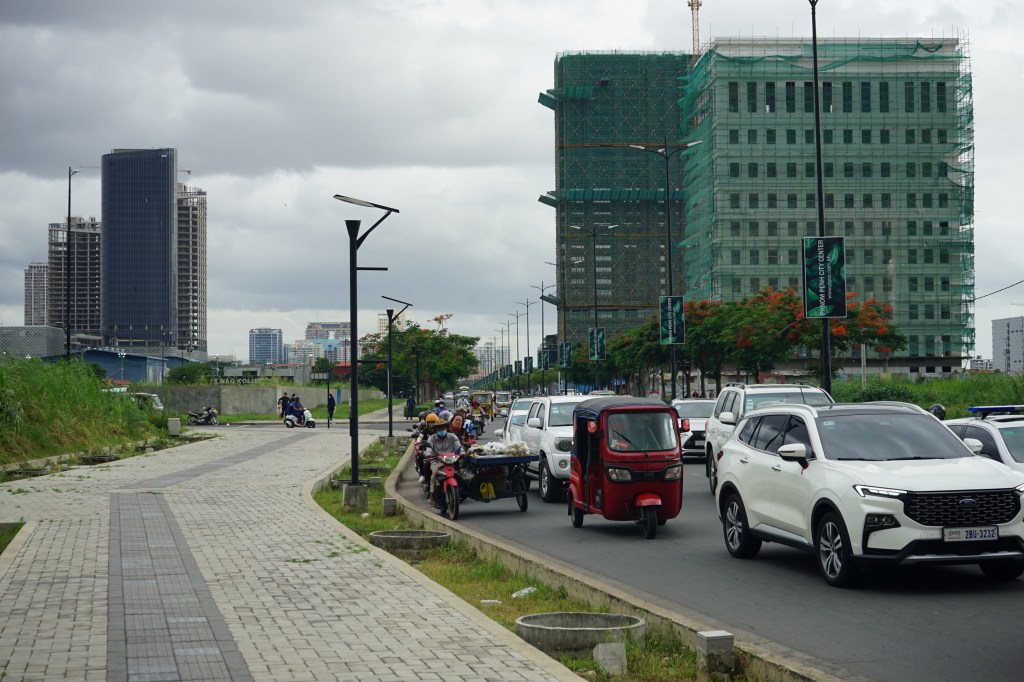
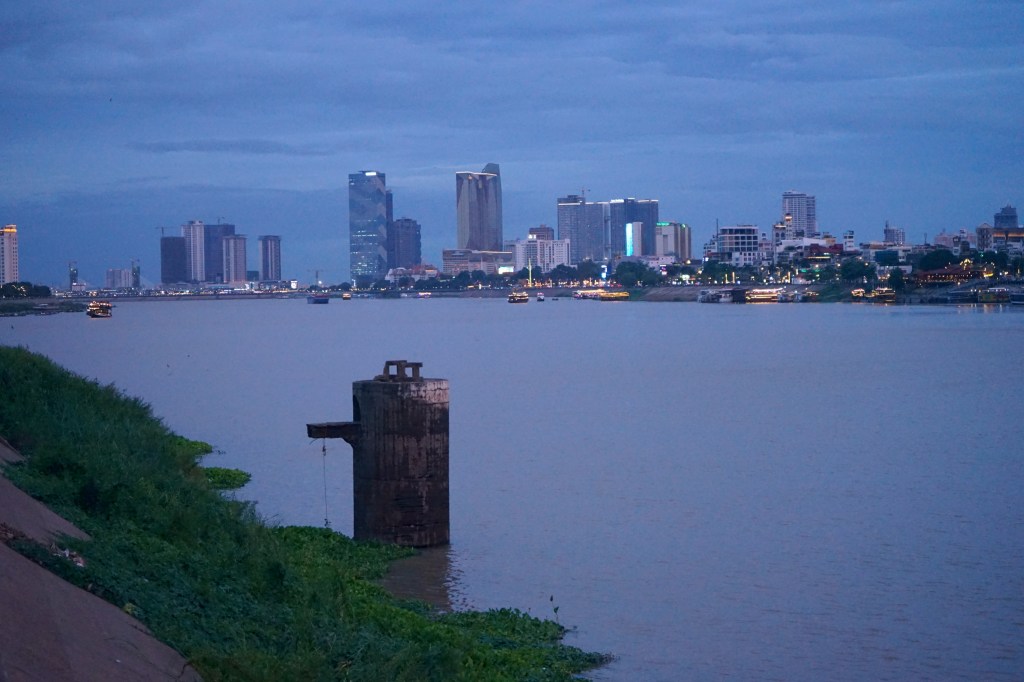
Phnom Penh was a village-like city in 2000. There were dirt roads and chickens and pigs running around. Just outside the center were swamps, farms and rice fields. The Mekong and Tonle Sap Rivers, the two big rivers that intersect at Phnom Penh, had communities of floating villages of ethnic Cham and Vietnamese people. Old boats docked and loaded passengers as their were few roads in Cambodia and boat was the easiest way into the provinces. One could imagine the city not too far removed from its long history as a river trading post. It’s something different now though.
Phnom Penh was once a cash-poor stagnant backwater where gunfire interrupted the quiet nights. It’s now a booming international city where the nights are never quiet, whether it be from the sounds of traffic, music from bars and restaurants or pile drivers working on yet another construction site.

 ADVENTURE-SOMEWHERE.COM
Write more…. What’s it like with Chinese management.? What’s it like for a pre teen? What’s it like where you sleep? Are you picking up the language again? When will your apartment be ready? Who are your friends? Does Angie have friends?
LikeLike