

The Black Sea can only be accessed from the Mediterranean via a 61-kilometer long narrow strip of water called the Dardanelles Straight and this has been an area of strategic importance for millennia. Thousands of years ago the straight was busy with trading ships passing through and the great city of Troy grew and prospered near the entrance as it became a hub for trade.
The line between history and mythology is blurred in regard to what is known of the ancient city. In Homer’s epic poem, the Iliad, the Greeks go to war with the Trojans after the prince of Troy runs away with Helen, the great beauty of the Greek world and wife of the Spartan King Menelaus.
The story was assumed by many to be little more than a myth until the remains of the ancient city were found in the nineteenth century. The first settlements here are 5000 years old and evidence seems to show that the city was burned down during the time period mentioned in the Iliad.
The Greek armies, after years of fighting, gained entrance to the city by a cunning trick, a wooden horse hiding soldiers in its belly. The Trojans, thinking the Greeks had retreated, brought the horse into the city and celebrated the end of the war while the hidden soldiers sneaked out and opened the city gates. The great city was razed to the ground, all for the beauty of one woman.
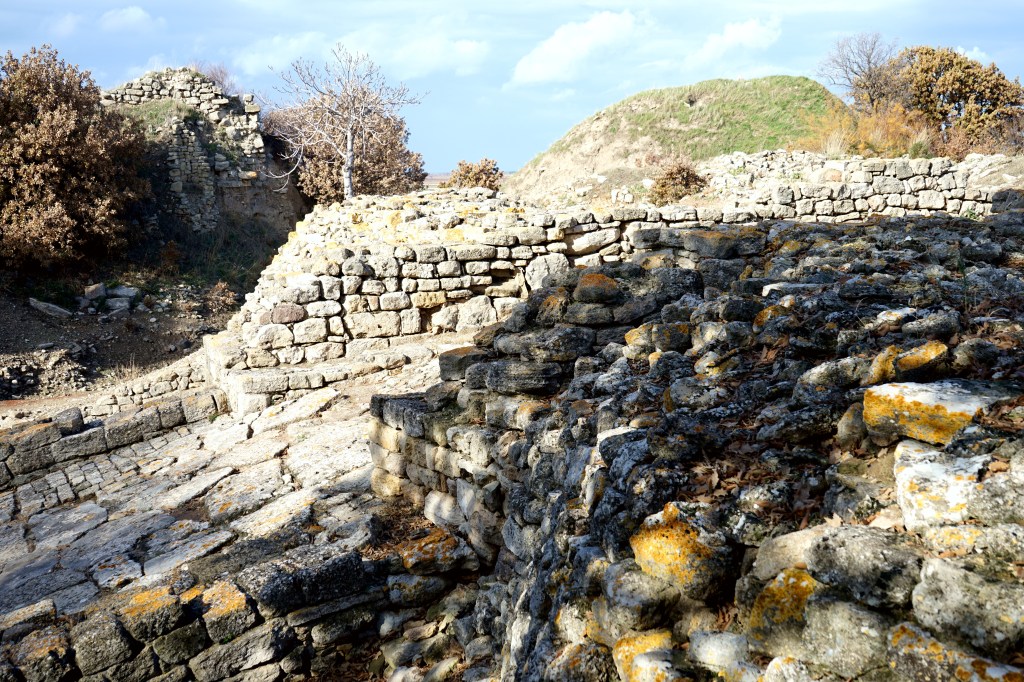
We reached the ruins of Troy after a long drive from the south. A strong wind whipped through the ruins, but otherwise it was a sunny winter day and the site was almost empty of people. I warned the kids not to expect too much. While the name Troy conjures up the magic of myths and legends, the ending of the Iliad serves as a warning that there is little left to see.
Signs at the site are not as favorable to the Greeks as Homer was in the Iliad. They imply that the real reason for the war was economic and that the Greeks basically just plundered Troy for its riches. In any case, it makes sense that the city would be targeted as it was not only wealthy, but it held a position of great strategic importance at the entrance to the Dardanelles. The kids, though, prefer hearing the stories of Achilles, Odysseus and, of course, the horse. Troy wouldn’t be the magical place it is without the myths.
From Troy we continued to the nearby city of Canakkale. Directly on the waterfront, the city looks across the Dardanelles to the Gallipoli peninsula where another great battle for the Dardanelles took place.
In 1915, the world was at war and this strategic straight once again was the key to accessing the Black Sea. As Lord of the Admiralty, Winston Churchill pushed the allies to create a new front in the war at the Dardanelles with the idea to capture Constantinople from the Ottomans and gain access to the Black Sea. This battle quickly turned into a stalemate of trench warfare where each side threw troops at each other. This is where Mustafa Kemal Attaturk, General of the Ottoman forces, told his troops, “I don’t order you to fight, I order you to die.”
For nine months the two sides fought a battle that went nowhere until the allies finally withdrew in defeat. Nothing was accomplished and the two sides suffered more than half a million casualties.
While most men were buried in the trenches where they died, the entire peninsula is dotted with memorials to the fallen. This is a place especially important in the psyches of Australians and New Zealanders as so many of their compatriots died in the campaign here. The Gallipoli landing is observed to date in these countries as Anzac Day.
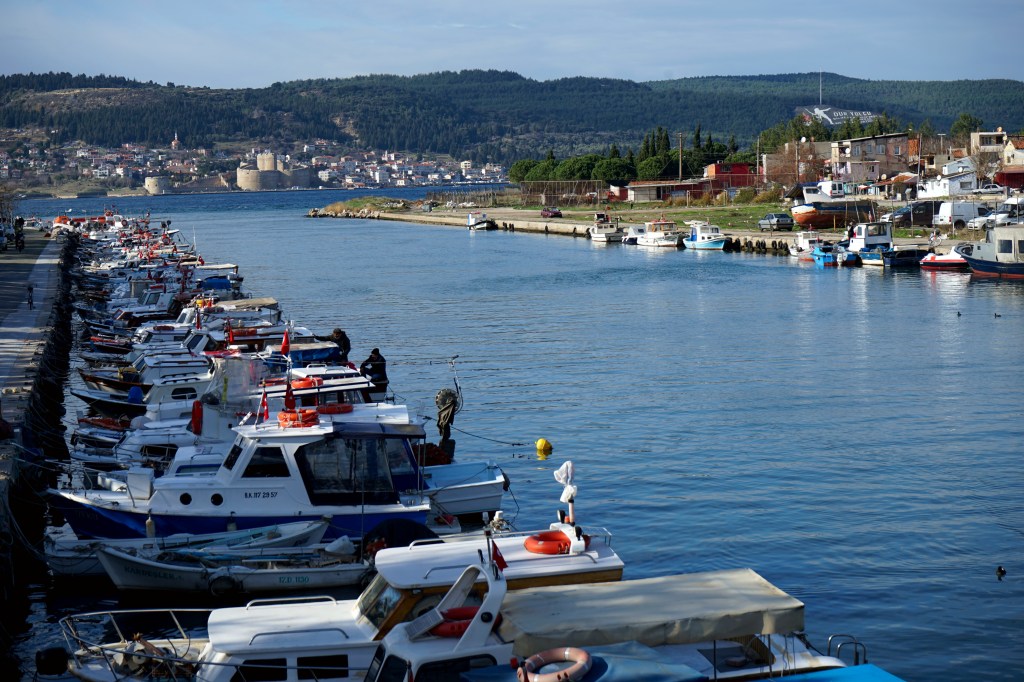
Today the city of Canakkale is a busy place in which the sound of gulls never seems to cease and cats line up at the quay where fishermen sell their catches.

Walking through the alleys and backstreets of the city is like wandering through time. A busy walking street is full of busy pedestrians and modern shops. The next street over is lined with abandoned stone buildings. ND negotiates the purchase of a microphone for his laptop at a computer store, while around the corner, straight from the pages of Dennis the Menace, a boy throws some water on an old man reading the newspaper who promptly jumps up and shakes his fist as the boy runs off.
Tola excitedly browses through the buckets of fresh fish next to the fishing boats, deciding on which ones to bring home, only to realize that since they’re still alive she will have to kill them. Instead she chooses to purchase some slightly less fresh fish from a fish market down the street.
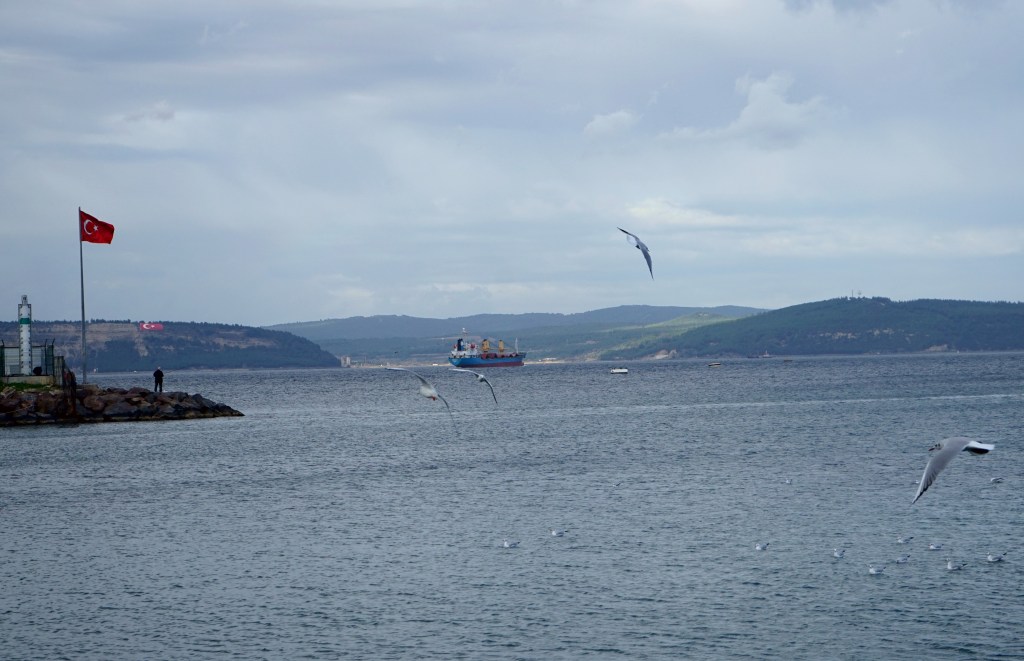
Through it all is the sound of the slow but continuous stream of cargo ships passing through the Dardanelles, a straight that brings riches, but also sometimes war.


Great post. I’m sure going to miss them. I hope your father is reimbursing your airline ticket cost
Lovexxxx
M
Sent from my iPad
LikeLiked by 1 person
This is so awesome and I also wanted to release the fish. They’re probably dead now 😭😭😭.
LikeLike